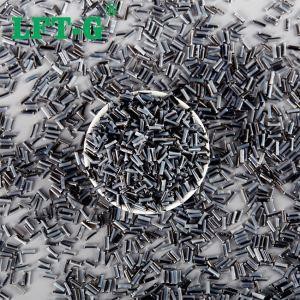

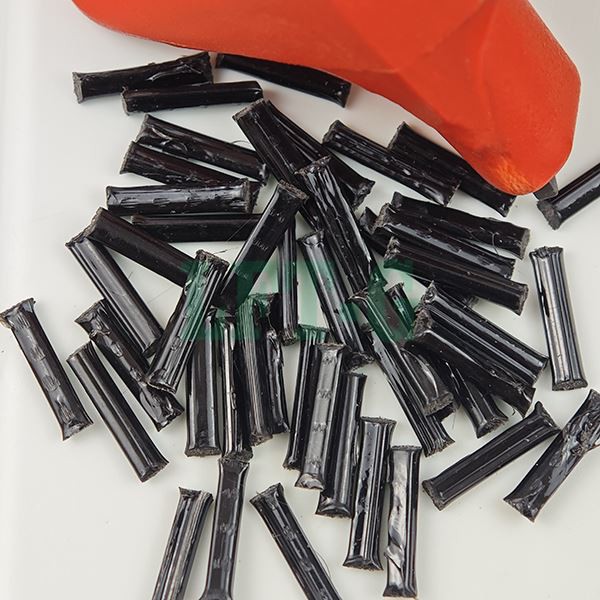
40% Carbon Fiber Nylon 66 Material CF40 PA66 Pellet
What is 40% carbon fiber nylon 66?
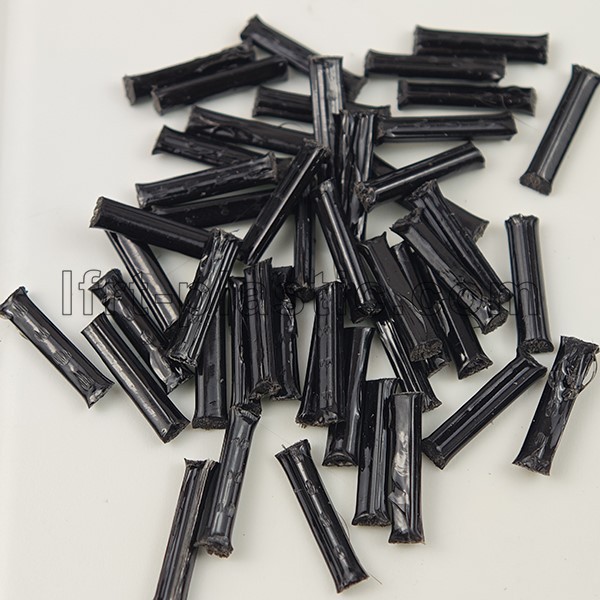
40% carbon fiber reinforced PA66 nylon is a technical composite that combines high mechanical strength, stiffness, and a low coefficient of friction. It also offers excellent chemical and impact resistance, making it suitable for demanding environments. LCF40 PA66 (Long Carbon Fiber Reinforced Polyamide 66) compound resin is a high-performance engineering plastic. The mechanical strength, heat resistance and dimensional stability of the material are significantly enhanced by adding long carbon fibers (usually 5-25mm in length) to the PA66 (nylon 66) matrix. Common long carbon fiber pa66 materials have different fiber content ratios, generally ranging from 20% to 60%.
What is the Advantage of CF40 PA66 material?
Ultra-high strength and rigidity: The tensile strength and flexural modulus are significantly higher than those of common PA66 and short fiber reinforced models, approaching the performance of metals, and can replace lightweight metal components such as aluminum alloys.
Outstanding heat resistance: The heat distortion temperature (HDT) can reach over 200℃, making it suitable for high-temperature environments (such as engine compartment components).
Excellent impact resistance: Long fibers absorb impact energy through a "fiber pull-out" mechanism and maintain good toughness at low temperatures, which is superior to the short carbon fiber (SCF) version.
Low warpage & Dimensional stability: Long fibers are evenly distributed, with low anisotropy and extremely low molding shrinkage rate, making it suitable for precision structural components.
Creep resistance & Fatigue resistance: Small deformation under long-term load, suitable for dynamic load components (such as gears, bearings).
Lightweight: With a density of only 1.3-1.5g/cm³, it is lighter than aluminum alloy, achieving a significant weight reduction effect.
Chemical resistance: Retains the oil and solvent resistance of PA66 pellet, making it suitable for harsh environments such as automotive fuel systems.
Is nylon carbon fiber brittle?
Nylon reinforced with carbon fiber (PA6/PA66+CF) is stiffer but more brittle than unfilled nylon, with toughness depending on fiber length, content, and modifiers. Short carbon fiber (SCF) versions are more brittle due to stress concentrations, while long carbon fiber (LCF) reinforced nylon offers better impact resistance through fiber pull-out energy absorption. Higher carbon fiber content (>30%) increases rigidity but reduces ductility, making the material prone to brittle fracture under impact-especially at low temperatures or in dry conditions.
How to Use CF PA66 Composite?
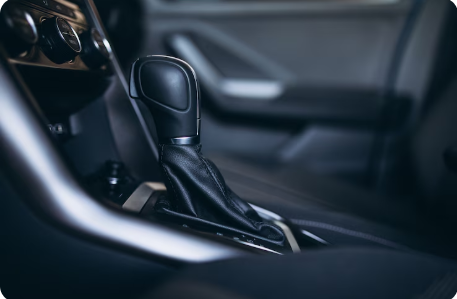
Automotive Parts
Structural components: Dashboard bracket, door module, seat frame, front-end module (reducing weight by 30%-50% by replacing metal)
Power system: Turbocharged intake pipe, engine hood, oil pan (high-temperature resistant + oil-resistant)
Electrified components: battery housing, charging gun shell, motor end cover (insulation + lightweight)
Electronic appliances
5G communication: Base station radomes, connectors
Consumer electronics: Notebook shells
Sports equipment
Bicycle frames, snowboard bindings, mountain climbing fasteners (lightweight + high impact toughness)
Industrial machinery
Transmission components: gears, bearings, pulleys (wear-resistant + creep-resistant)
Hydraulic system: Valve body, sealing ring (high pressure resistance + chemical corrosion resistance)
Robots: Joint components, mechanical arms (high rigidity + dynamic load capacity)
Aerospace Industry
Unmanned aerial vehicle: fuselage frame, rotor connection parts (high strength-to-weight ratio)
Aviation interior: Lightweight structural components, heat-resistant casings, brackets, fasteners (flame-retardant modified version)
Energy equipment
Wind turbine blade connection parts, solar bracket structural parts (weather resistance + long service life)

The emergence of LCF PA66 material represents an important technological leap in the field of engineering plastics. The unique performance characteristics of this material are quietly changing the cognitive boundaries of traditional materials' science - it is neither a simple plastic nor a simple composite material, but a "cross-border" material system that combines the flexibility of organic polymers with the rigidity of inorganic fibers.
The research and development process of this material itself is also highly instructive. It breaks through the simple idea of "performance superposition" in traditional composite material research, and instead achieves a "synergistic multiplication" effect of material performance by precisely controlling the fiber length, orientation distribution and interface bonding state. This material design concept is influencing the research and development direction of other composite materials.
FAQ
Q: Is CF PA66 materials really stronger?
A: Yes, continuous carbon fiber filaments are super strong and, by all means, are more robust than chopped carbon fibers or any other traditional material used for injection molding.
Q: Is PA6 stronger than PA12 pellet?
A: PA6 pellet is stronger and stiffer, making it suitable for high-load applications where rigidity is required. PA12 pellet is more flexible and impact-resistant, making it ideal for applications where durability under stress is needed, such as tubing and fuel lines.
Q: What is CF PA66 material used for?
A: At present, polyamide 6 is a significant construction material used in many industries, for instance in the automotive industry, aircraft industry, electronic and electrotechnical industry.
It is worth noting that the development history of LCF PA66 plastic pellets also reflects the evolution trend of contemporary materials' science: from the optimization of a single performance to the coordinated development of multiple performances. LFT-G®'s LCF Nylon 66 material has already occupied a certain position in the market. If you want to know more about this material, you can contact our material experts. Click below,
LFT-G® LFT-PA66-BC04
This article provides relevant data on long carbon fiber pa66 material, allowing for a better observation of this material from a professional perspective. Long carbon fiber pa66 material has diverse applications and is a kind of all-round developed material.
Mechanical PropertiesProperty |
Value |
Unit |
Test Standard |
|---|---|---|---|
| Tensile Strength | 260-280 | MPA | ISO 527 |
| Tensile Modulus | 30000-31000 | MPA | ISO 527 |
| Elongation at Break | 0.5-2.0 | % | ISO 527 |
| Flexural Strength | 370-390 | MPA | ISO 178 |
| Flexural Modulus | 20000-21000 | MPA | ISO 178 |
| Notched Izod Impact Strength | 25-37 | kJ/m² |
ISO 180
|
| Notched Charpy Impact Strength | 24-31 | kJ/m² |
ISO 179
|
Other Properties
| Property | Value | Unit | Test Standard |
|---|---|---|---|
|
Molding Shrinkage
|
0.1-0.5 | % | ASTM D-955 |
| Melting Temperature | 260-300 | °C | |
|
Deflection Temperature (1.8 MPA) |
250-260 | °C |
ISO 75-2
|
| Mold temperature | 80-100 | °C |
Processing Precautions:
Specialized injection molding equipment and processes are required.
The mold design should take into account the fiber orientation and flow.
The processing temperature is usually slightly higher than that of ordinary PA66 material.
Pay attention to controlling the injection speed to avoid excessive fiber breakage.
If you want more detailed technical data, please click the icon below to download.
Hot Tags: 40% carbon fiber nylon 66 material, China, manufacturers, suppliers, factory, buy, customized