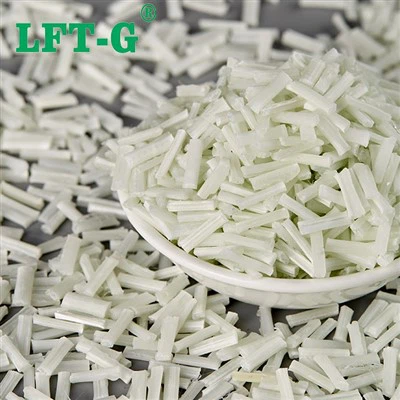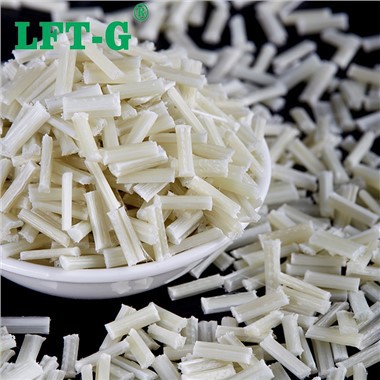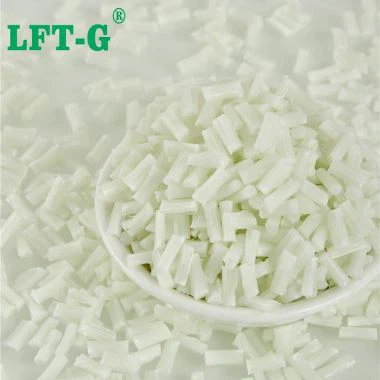


High-Performance LFT PA66 CF40 (LCF 40%) Composite | LFT-G® Ultimate Performance LFT-G® PA66 CF40 (Model: BC04B)
Experience the pinnacle of polymer composites with LFT-G® PA66 CF40. While commonly searched for as "CF40," this material is technically a Long Carbon Fiber (LCF) reinforced Polyamide 66. It is engineered to deliver an unparalleled combination of extreme strength, high stiffness, and ultra-low weight, providing a superior, high-performance alternative to metals like aluminum and magnesium in the most demanding structural applications. Let's redefine what's possible.
 What is PA66 CF40?
LFT-G® BC04B PA66 CF40 is a 40% long carbon fiber (china's) reinforced polyamide66(nylon66) Compound, that a fiber reinforced Long Fiber Thermoplastic (LFT) produced through a pultrusion process, which ensures that each pellet contains long, continuous strands of high-strength carbon fiber, fully impregnated within a tough Polyamide 66 (PA66) matrix. The "LCF40" designation signifies a 40% by weight content of Long Carbon Fiber. During the injection molding process, these fibers form a robust, three-dimensional skeletal network within the finished part. This internal structure is the source of its extraordinary mechanical properties, distinguishing it significantly from short carbon fiber (SCF) alternatives.
The PA66 matrix provides excellent thermal resistance, good chemical compatibility, and inherent toughness, while the long carbon fibers contribute properties that rival metals. This synergy results in a material that is not just a plastic, but a true engineering composite solution.
Core Benefits Of PA66 CF40:
- Extreme Stiffness-to-Weight Ratio: Delivers stiffness comparable to or exceeding some metals, at a fraction of the density. This is critical for applications where deflection under load is not an option.
- Superior Tensile Strength: The long fiber network efficiently distributes stress across the part, providing exceptional strength for load-bearing structural components.
- Inherent EMI/RFI Shielding: The conductive nature of the carbon fiber network provides effective electromagnetic and radio-frequency interference shielding for sensitive electronic components without secondary processing.
- High-Temperature Performance: The high-performance PA66 matrix ensures the material retains its mechanical properties at elevated operating temperatures, far exceeding standard polymers.
- Excellent Dimensional Stability: Exhibits a very low Coefficient of Thermal Expansion (CTE), ensuring parts maintain their precise dimensions and tolerances even with significant temperature fluctuations.
Technical Specifications Of PA66 LCF40 Datasheet
We believe in data-driven decisions. The following data, based on industry standards, illustrates the clear performance advantages of LFT-G® PA66 CF40. All tests are performed on injection-molded specimens under controlled conditions according to ISO standards.
Typical Material Properties (Model: LFT PA66 CF40-BC04B)
| Property | Test Method | Value | Unit |
|---|---|---|---|
| Density | ISO 1183 | 1.31 | g/cm³ |
| Tensile Strength | ISO 527 | 274 | MPa |
| Flexural Modulus | ISO 178 | 20-23 | GPa |
| Notched Izod Impact Strength | ISO 180 | 29 | KJ/m2 |
| Heat Deflection Temperature (1.8 MPa) | ISO 75 | 254 | °C |
Download Complete LFT PA66 CF40 (BC04B) Data Sheet PDF
Performance Comparison: LFT vs. Metals
| Material | Density (g/cm³) | Specific Strength (Strength/Density) | Specific Stiffness (Stiffness/Density) |
|---|---|---|---|
| LFT-G® PA66 CF40 | 1.28 | ~227 | ~21.9 |
| Aluminum (6061-T6) | 2.70 | ~115 | ~25.5 |
| Magnesium (AZ91D) | 1.81 | ~127 | ~24.8 |
Proven Applications & Case Studies
From the skies to the factory floor, LFT-G® PA66 CF40 is enabling innovation where performance cannot be compromised. This material is ideal for complex, load-bearing parts that require a combination of low weight, high stiffness, and reliability.
Case Study: Aerospace Drone Structural Arm
The Challenge: An aerospace client needed to increase the flight time and payload capacity of their commercial surveillance drone. The existing aluminum arms were durable but represented a significant portion of the drone's total weight, limiting its operational efficiency.
The Solution: Our engineering team collaborated with the client to redesign the arms using LFT-G® PA66 CF40. The high stiffness of the material ensured zero flex during high-G maneuvers, while its low density drastically reduced weight. The design freedom of injection molding also allowed for the integration of mounting points and internal wiring channels directly into the part.
The Result: The new carbon fiber composite arms led to a 40% reduction in component weight, contributing to a 15% increase in average flight time and a 25% increase in viable payload capacity. This directly translated to higher mission value and a stronger competitive position for our client.

Case Study: High-Speed Industrial Robot Arm
The Challenge: A manufacturer of factory automation systems was facing limitations with the speed and precision of their pick-and-place robots. The inertia of the heavy metal arm components caused vibrations at high speeds, forcing them to program slower, less efficient movements to maintain accuracy.
The Solution: By replacing key structural components of the robot arm with LFT-G® PA66 CF40, the moving mass was significantly lowered. The material's high damping characteristics also helped to quell vibrations much faster than metal.
The Result: The robot's inertia was reduced by over 50%. This allowed the client to safely increase the operational speed and acceleration, resulting in a 20% faster cycle time per unit, a massive boost in factory throughput, and improved placement accuracy.

Image 2: Lightweighting industrial robot arms with LFT-G® composites enables faster, more precise movements.
Key Advantages of Long Carbon Fiber (LCF) Technology
Beyond the primary specs, the "long fiber" aspect of our LCF technology provides distinct advantages over materials with short or chopped fibers.
- Ultimate Lightweighting Potential: Carbon fiber has one of the highest strength-to-density ratios of any commercially available material. By using long, continuous fibers, we maximize the translation of this inherent property into the molded part. This allows for the design of components that are not only lighter than aluminum but can even replace magnesium alloys, pushing the boundaries of what is possible in weight-sensitive designs.
- Integrated EMI/RFI Shielding: In an increasingly connected world, protecting sensitive electronics from electromagnetic interference (EMI) is critical. The interconnected network of long carbon fibers within our composite creates a natural Faraday cage effect. This provides effective shielding without the need for secondary processes like conductive coatings, vacuum metallization, or separate metal enclosures, thereby saving cost, time, and weight.
- Exceptional Dimensional Stability: Precision is paramount. LFT-G® PA66 CF40 exhibits a very low, metal-like Coefficient of Thermal Expansion (CTE). This means that as temperatures fluctuate in the operating environment, the part will expand and contract minimally. This is crucial for applications with tight tolerances, such as optical mounts, precision measurement devices, and components that interface directly with metal parts, ensuring consistent performance and reliability.
Design & Processing Guidelines
To unlock the full potential of LFT-G® PA66 CF40, proper design and processing are essential. As your technical partner, we provide these initial guidelines:
- Material Handling: Polyamide 66 is hygroscopic and must be properly dried before molding to prevent hydrolysis and property degradation. We recommend drying for 2-4 hours at 120°C (250°F).
- Tooling: Carbon fiber is abrasive. We strongly recommend using high-quality, hardened tool steel (e.g., P20, H13) for molds to ensure a long production life.
- Gate Design: To preserve fiber length, which is critical for performance, use large(>3mm), full-round, or tab-style sprue gates of injection molding for LFT material. Avoid pin-point or submarine gates that can break the fibers during injection.

Advice the Sprue gate size Sheet of Injection molding made LFT material for large part.
- Part Design: Maintain generous radii in corners and uniform wall thicknesses wherever possible to promote smooth melt flow and prevent stress concentrations.
Frequently Asked Questions (FAQ)
 What is the main difference between LCF (Long Carbon Fiber) and SCF (Short Carbon Fiber)?
The primary difference is performance, driven by fiber length. LCF (10mm or more) creates a structural skeleton within the part, leading to vastly superior impact strength, creep resistance, and dimensional stability. SCF (less than 1mm) acts more as a simple reinforcing filler, providing a moderate increase in stiffness and strength but without the structural benefits of a long fiber network.
Is this material electrically conductive?
Yes. Due to the high loading of carbon fiber, LFT-G® PA66 CF40 is electrically conductive and can be used for electrostatic discharge (ESD) and EMI shielding applications. It should not be used in applications requiring electrical insulation. We can provide surface and volume resistivity data upon request.
How does LCF (Long Carbon) compare to LGF (Long Glass) fiber composites?
While both are high-performance materials, they serve different purposes. Long Glass Fiber (LGF) offers a fantastic balance of strength, impact resistance, and cost-effectiveness. Long Carbon Fiber (LCF) is a step above in performance, offering significantly higher stiffness, lower density (for ultimate lightweighting), and electrical conductivity, making it the choice for the most demanding, weight-critical, or electronically sensitive applications.
Engineer Your Competitive Edge With LFT-G®
We are the professional manufacturer that produce and supplier long fiber reinforced thermoplastic(LFRT&LFT) in China. Our composite is all filled long glass/carbon fiber with any additive to meets the several requirements of UV-Resistance,FR,Toughness,conductive,anti-static grade as a reinforced product will bring additional benefits to our customer.
Professional team
29,0+ experts worldwide
Senior project managers effectively control all aspects of the project
7x24 hours delivery
Located in 27 cities around the world,with 50 delivery centers,providing 200+ languages,7x24 hours delivery capacity,is the best partner for enterprise globalization
83M
Total Freelancer
73M
Positive Review
900M
Order recieved
23M
Projects Completed
Ready to push the boundaries of performance? Our team of composite specialists is prepared to help you evaluate, design, and implement LFT-G® PA66 CF40 in your next project. Contact us today to leverage the ultimate in lightweight strength.
Hot Tags: pa66 cf40 (lcf 40%) composite, China, manufacturers, suppliers, factory, buy, customized