

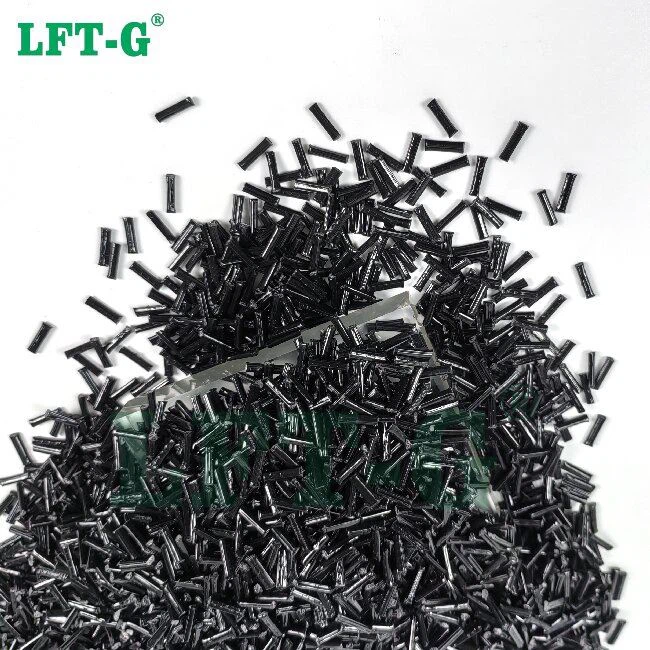
LFT-G® PBT LCF40 Long Carbon Fiber Reinforced PBT Composite
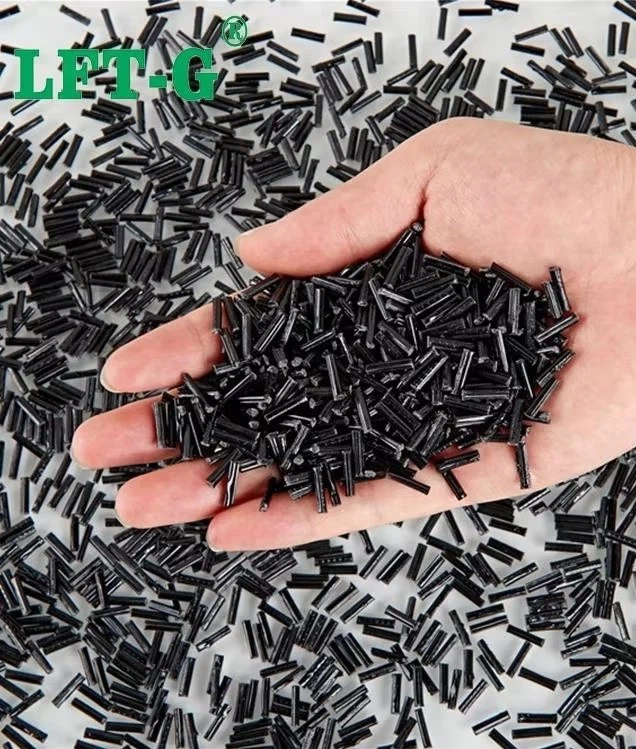
LFT-G® PBT LCF40 is a 40% long carbon fiber reinforced polybutylene terephthalate compound engineered for high stiffness, permanent electrical conductivity, and exceptional dimensional stability. The continuous carbon fiber network transforms standard PBT into a structural material capable of replacing die-cast metals in precision components.
The PBT matrix offers excellent chemical resistance, low moisture absorption, and fast crystallization, ensuring reliable performance in automotive electrical systems, industrial automation, and electronic equipment exposed to heat, chemicals, and static discharge.
Why Choose PBT LCF40?

LFT-G® PBT LCF40 combines the fast-cycle processability and chemical resistance of PBT with the mechanical strength and conductivity of long carbon fiber reinforcement. Compared to short-carbon-fiber PBT, it delivers higher impact strength, better creep resistance, and stable conductivity that does not degrade with wear. Its low warpage and tight molding shrinkage make it an ideal solution for precision ESD-safe components.
Ultra-High Stiffness & Conductivity
The long carbon fiber network provides exceptional rigidity and permanent static dissipation that does not rely on surface coatings or additives that can migrate.
Dimensional Stability & Low Warpage
Low moisture absorption and tight molding shrinkage keep tolerances stable even in humid environments, preventing the warpage common in glass-fiber reinforced grades.
Fast Cycle & Cost-Effective
PBT crystallizes rapidly, enabling short cycle times in injection molding. This makes PBT LCF40 a cost-efficient alternative to die-cast metal and high-performance engineering plastics.
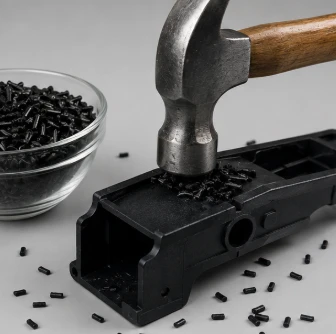
Technical Data Sheet – LFT-G® PBT LCF40
Applications
Automotive Electrical & E‑Mobility
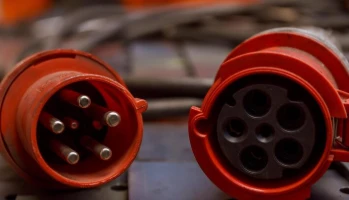
EV battery module housings, sensor brackets, and charging connector bodies need both structural rigidity and static dissipation. LFT-G® PBT LCF40 provides permanent conductivity without coatings, while its low warpage keeps precision mating surfaces accurate.

Industrial Automation & ESD Equipment
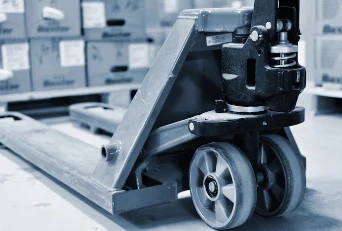
Conveyor rollers, gripper jaws, and cleanroom handling fixtures are prone to static buildup that damages sensitive components. PBT LCF40's carbon fiber network bleeds off static permanently while delivering the stiffness needed for high-speed automation.
Electronics & Precision Components
High-density connector housings, relay bases, and SMT fixtures require tight tolerances and reliable ESD protection. PBT LCF40 offers excellent electrical insulation properties combined with bulk-inherent conductivity and fast-cycle injection molding.
Injection Molding – Quick Reference


This processing guide is specifically developed for LFT long carbon fiber reinforced thermoplastics. All parameters are optimized for low‑shear processing to maintain fiber length and maximize mechanical performance.
A metering screw with 18:1‑22:1 L/D ratio, combined with a large open nozzle and free‑flow check valve, minimizes fiber breakage during injection. Proper equipment selection preserves fiber length distribution and ensures consistent part strength and conductivity.
LFT-G® PBT LCF40 exhibits good melt stability within the recommended processing window. Adequate mold temperature promotes surface quality and minimizes residual stress. Purge with unfilled PBT or PP before shutdown to prevent material degradation and nozzle blockage.
- Pre‑drying: 3‑5 hrs @ 110‑130°C (desiccant dryer recommended)
- Melt Temperature: 240‑270°C
- Mold Temperature: 60‑90°C
- Injection Pressure: 60‑110 MPa
- Screw L/D: 18:1‑22:1, metering type
Note: Use a large open nozzle and a free‑flow check valve to preserve fiber length. Purge with unfilled PBT before shutdown. Avoid excessive residence time above 280°C.
FAQ
Q: Is LFT-G® PBT LCF40 permanently conductive or does it rely on surface coating?
A: Permanently conductive. The long carbon fiber network is distributed throughout the entire part cross-section, so conductivity is bulk-inherent and does not degrade with wear, abrasion, or cleaning - unlike conductive coatings or short-fiber compounds that lose performance over time.
Q: How does LFT-G® PBT LCF40 compare to glass fiber reinforced PBT?
A: PBT LCF40 delivers approximately 2x higher stiffness (tensile modulus 25,000 MPa vs. ~12,000 MPa for GF30 PBT), significantly lower density, and permanent electrical conductivity. Glass-fiber PBT is insulating, heavier, and less dimensionally stable under load, while PBT LCF40 is conductive, lighter, and far more rigid.
Q: What is the recommended processing method for LFT-G® PBT LCF40?
A: Use standard injection molding machines with a low-compression screw and a free-flow check valve. Pre-dry at 110-130°C for 3-5 hours. Recommended melt temperature is 240-270°C and mold temperature is 60-90°C. Purge with unfilled PBT before shutdown.
Contact: Emily
Email: sale04@lfrtplastic.com
WhatsApp / Mobile: +86 188 5034 4811
Hot Tags: high‑rigidity conductive pbt carbon fiber granules, China, manufacturers, suppliers, factory, buy, customized


