
The main application of LFT
Long fiber reinforced thermoplastics (LFT) have been used in semi-structural applications in the automotive industry. Their main advantages are attractive cost/performance ratios and relatively low density. The European end-of-life vehicle (ELV) legislation has promoted the development of this material, which has promoted recycling and thus also facilitated the replacement of thermoset materials with thermoplastic materials.
In the automotive industry, LFT is mainly used for the production of structural and semi-structural components such as front-end modules, bumper frames, instrument panel frames, battery trays, spare tire compartments, seat frames, foot pedals, and integral bottom plates. Long fiber reinforced polypropylene is used in car hoods, dashboard skeletons, battery trays, seat frames, car front modules, bumpers, luggage racks, spare tires, fenders, fan blades, engine chassis, roof sheds. Liners, etc.; long-fibre-reinforced PAs are further extended into the hood because LFT-PA is not only high in hardness and low in weight, but also has a high glass-fibre content and its thermal expansion coefficient is almost the same as that of metal, and can withstand the high temperatures brought by the engine. .
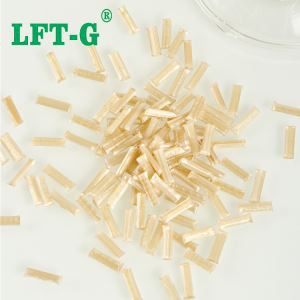
Here are two main materials for LFT. LFT-G is the result of technological innovations in short glass fiber thermoplastic particulate materials (FRTP). Although the early FRTP pellet length can reach 5~6mm, after the mixing, pelleting, plasticizing, injection molding and other technical processes, the final length of the fiber in the product is often less than 1mm, which can only increase the rigidity of the product as a filler. The increase in tensile strength and impact resistance is very limited. Therefore, FRTP was not a mainstream composite at the time. In order to give full play to the advantages of high efficiency and low cost in injection molding production, efforts were made to minimize the degree of fiber breakage. LFT-G was born in the early 1980s. The production process of LFT-G products is similar to that of GMT. It also requires two mature processes, namely the formation of long particles and the injection molding or compression molding of the products.
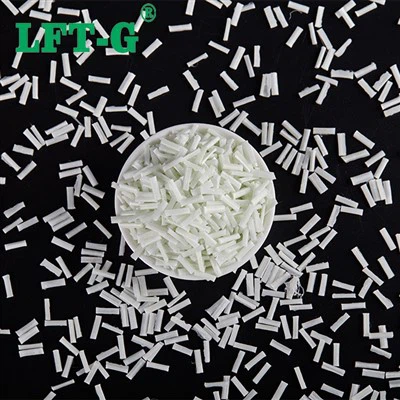
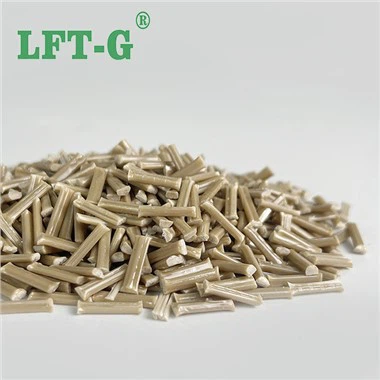
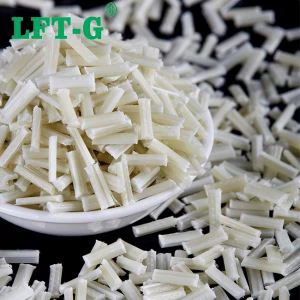
LFT-G pellets have a diameter of about 3mm, lengths of 12mm and 25mm, of which pellets with a length of about 12mm are mainly used for injection molding, and pellets with a length of about 25mm are mainly used for compression molding. In the LFT-G pellet injection molding process, although the injection molding machine has undergone many improvements, due to the limitation of the injection molding process, the fibers in the final product can only reach 3.2 to 6.4 mm. Although this length is longer than the FRTP injection molded fiber, the impact resistance of the product is also significantly improved, but shorter than the LFT-D injection molded or compression molded fiber, the strength and impact resistance are also worse than LFT-D.
LFT-D is a process technology for the production of long-fiber-reinforced thermoplastic composites directly on-line. It is different from GMT and LFT-G. The key factor is that the semifinished product steps are omitted and the choice of materials is also more flexible. In LFT-D technology, not only the fiber content and length, but also its matrix polymer can be directly adjusted to the requirements of the final part. The amount of additive used can change and affect the mechanical properties of the product and the properties of the particular application material, such as thermal stability, colorability, UV stability, and the bonding properties of the fiber to the substrate, which also means that each special application Both are available with LFT-D's unique material formula.
The impact resistance of LFT-D press-formed products is slightly lower than that of GMT, but due to its much longer fiber length than LFT-G, its impact resistance is significantly higher than that of LFT-G. In addition, according to a large number of studies, the productivity of LFT-D injection molding is higher than that of standard LFT-G pellets because the low plasticization of LFT-D requires improvement in the occurrence of fiber breakage. Parts with a molding cycle longer than 1 minute can be completed within 30 seconds using LFT-D injection molding equipment. Figure 3-10 shows the 2003 Volkswagen Golf V front-end framework produced using the LFT-D.