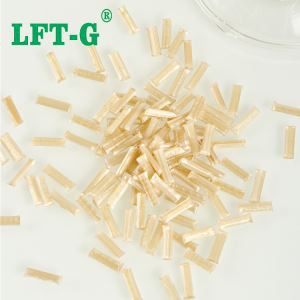

PP plastic raw material, chemical name: polypropylene, characteristics: low density, strength stiffness, hardness and heat resistance are better than low-pressure polyethylene, can be used at about 100 degrees. It has good electrical properties and high-frequency insulation, which is not affected by humidity, but becomes brittle at low temperature, is not wear-resistant, and is easy to age. Suitable for making general mechanical parts, corrosion resistant parts and insulating parts.
PP is a semi-crystalline material. It is harder and has a higher melting point than PE. Since the PP temperature of the homopolymer type is very brittle when it is below 0 ° C, many commercial PP materials are random copolymers of 1 to 4% ethylene or a clamp copolymer of a higher ratio of ethylene.
The copolymer type PP material has a low heat distortion temperature (100 ° C), low transparency, low gloss, low rigidity, but has a stronger impact strength. The strength of PP increases as the ethylene content increases. The Vicat softening temperature of PP is 150 °C. Due to the high degree of crystallinity, this material has excellent surface stiffness and scratch resistance. There is no environmental stress cracking problem in PP. Typically, PP is modified by the addition of glass fibers, metal additives or thermoplastic rubber. The flow rate of PP has a MFR ranging from 1 to 40. Low MFR PP materials have better impact resistance but lower elongation. For materials of the same MFR, the strength of the copolymer type is higher than that of the homopolymer type. Due to crystallization, the shrinkage rate of PP is quite high, generally 1.8 to 2.5%. And the direction uniformity of shrinkage is much better than materials such as PE-HD. The addition of 30% glass additive can reduce the shrinkage to 0.7%. Both the homopolymer type and the copolymer type PP materials have excellent moisture absorption resistance, acid and alkali corrosion resistance, and solubility resistance. However, it is not resistant to aromatic hydrocarbons such as benzene solvents, chlorinated hydrocarbons (carbon tetrachloride) solvents, and the like. PP does not have oxidation resistance at high