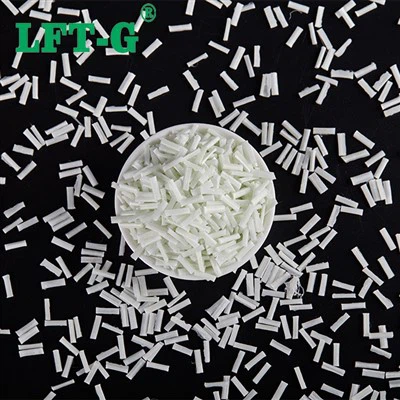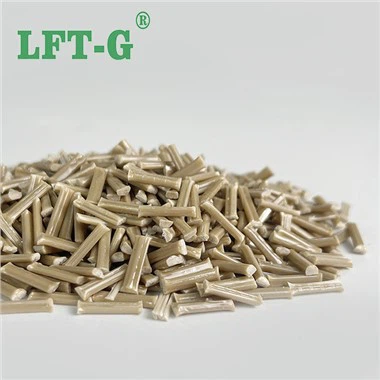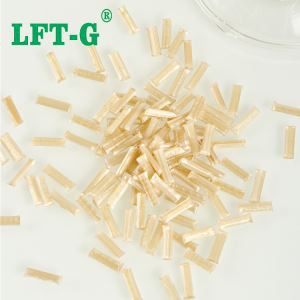

PA66 can be formed by conventional plastic processing, such as injection molding, extrusion molding, rotational molding, blow molding, thermoforming, and the like. PA66 processing temperature control range is narrow, generally adjusted at about 10 °C, the screw temperature is slightly lower, it will block the nozzle, the screw temperature is high, and the PA66 melt viscosity drops sharply. Therefore, choosing the right screw temperature is an important condition to ensure the quality of the product.
The PA66 melt is highly sensitive to water, and a small amount of water causes hydrolysis, and the relative molecular mass decreases, and the mechanical properties of the product are lowered. Therefore, the water content must be strictly controlled. PA66 is more susceptible to thermal oxidation and turns yellow. It should be dried by vacuum heating. The drying temperature is 80-90 ° C, and the drying time is controlled at 5-8 h.
Due to the higher melting point of PA66, the mold temperature should also be appropriately increased. If the mold temperature is too low and the melt cools too quickly, the product will generate internal stress. The dimensional change of PA66 products due to temperature and water absorption is reversible, and dimensional changes caused by residual stress and post-crystallization are irreversible. When the melt-molded PA66 is cooled from the molten state, volume shrinkage due to a change in humidity, particularly a crystalline polymer such as PA66, has a large specific volume change between melting and solidification and crystallization. The difference between the specific volume in the molten state and the specific volume at normal temperature is the volumetric contraction. If the shrinkage is isotropic, then its cube root is the so-called molding shrinkage. In fact, the shrinkage is anisotropic, so it is difficult to calculate the molding shrinkage.
The stress relaxation and heat shrinkage experienced by PA66 at high temperatures also cause dimensional changes. The amount of dimensional change is related to the thickness of the part and the temperature of the mold. As the thickness increases, the molding shrinkage of PA66 tends to increase. Various additives such as heat stabilizers, plasticizers, flame retardants, lubricants, colorants, foaming agents, plastic cross-linking agents, etc. can be added to PA66 to improve the performance of PA66 to varying degrees.