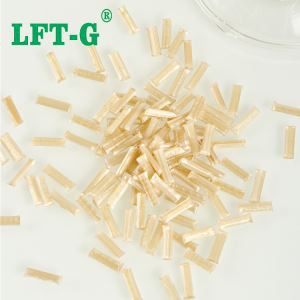

PA66 (Nylon 66) vs. POM
Which Engineering Plastic is Right for You?
Choosing the right high-performance polymer is critical for the success of any engineering project. Two of the most common and versatile choices are Polyamide 66 (PA66), widely known as Nylon 66, and Polyoxymethylene (POM), often referred to by trade names like Acetal. While both are excellent semi-crystalline thermoplastics prized for their mechanical properties, they have distinct profiles that make them suitable for different applications. This comprehensive comparison will break down the key differences between PA66 and POM to help you make an informed material selection.
At a Glance: Head-to-Head Comparison
The following table provides a quick overview of the primary advantages, disadvantages, and typical applications for both PA66 and POM.
|
Feature |
Nylon 66 (PA66) |
Polyoxymethylene (POM) |
|---|---|---|
Advantages |
|
|
Disadvantages |
|
|
Applications |
Ideal for wear-resistant and power transmission parts like gears, cams, bushings, bearings, rollers, and other self-lubricating components. |
Excellent for precision parts requiring high dimensional stability, such as gears, bearings, plumbing parts, automotive fuel system components, and snap-fit assemblies.
|
PA66 is often chosen for high-load wear parts, while POM excels in applications requiring high precision and dimensional stability.
Detailed Analysis: Key Property Differences
Mechanical Strength and Toughness
Both PA66 and POM are strong materials, but they excel in different ways. PA66 generally offers superior toughness and fatigue resistance, meaning it can withstand repeated stress and impact cycles better over its lifetime. POM, conversely, often exhibits higher creep resistance, making it better suited for parts that are under a constant load for extended periods. The tensile strength of POM can be higher than standard PA66, but the overall robustness and impact resilience of conditioned PA66 are typically superior.
Moisture Absorption and Dimensional Stability
This is perhaps the most significant difference between the two materials. **PA66 is hygroscopic**, meaning it absorbs moisture from the atmosphere. This absorption causes the material to swell slightly and changes its properties-it becomes tougher and more impact-resistant but less stiff and strong. This must be accounted for in part design. **POM, on the other hand, has very low moisture absorption**, resulting in exceptional dimensional stability regardless of the ambient humidity. This makes POM the superior choice for high-precision parts that must maintain tight tolerances in all environments.
Friction and Wear Resistance
Both materials are excellent for bearing and wear applications. POM has a naturally low coefficient of friction, making it exceptionally "slippery" and ideal for sliding components that require low friction and minimal stick-slip behavior. PA66 also has good wear properties and is often considered tougher and more resistant to abrasive wear, particularly in rugged, high-load applications.
Conclusion: How to Choose
Making the right selection between PA66 and POM comes down to your application's primary requirements:
- Choose Nylon 66 (PA66) if: Your application requires high toughness, excellent wear and abrasion resistance, high fatigue strength, and good performance at elevated temperatures. It is ideal for robust mechanical parts like gears, rollers, and structural components where slight dimensional changes due to humidity are acceptable.
- Choose POM if: Your priority is exceptional dimensional stability, low moisture absorption, high creep resistance, a low coefficient of friction, and excellent machinability for high-precision components. It is perfect for bushings, bearings, valve parts, and snap-fit assemblies that operate in varied humidity conditions.
Still Unsure? Let Our Experts Help.
Material selection can be complex. If you need further guidance on choosing between PA66, POM, or other engineering thermoplastics for your specific project, our team of material experts is here to assist you.