
Compare Long Carbon Fiber PA6 and SCF Nylon6 Composites
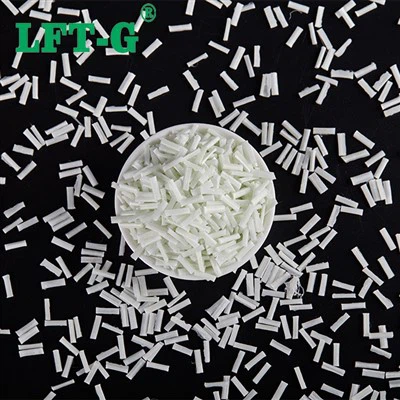
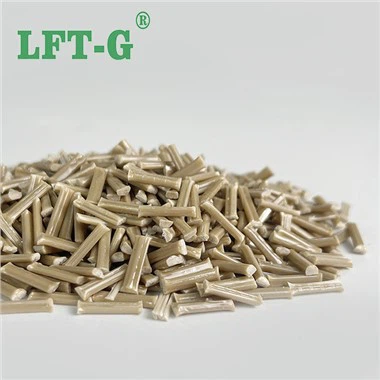
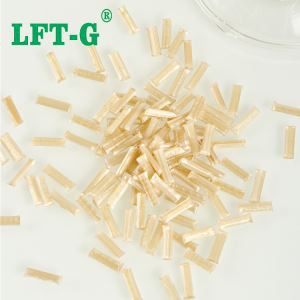
Carbon fiber reinforced nylon 6 (PA6) is a high-performance composite material. By combining carbon fiber with the nylon 6 matrixes, the mechanical properties and thermal stability of the material have been significantly improved. According to the different lengths of carbon fibers, it can be divided into long carbon fiber reinforced PA6 (long carbon fiber PA6) and short carbon fiber reinforced PA6 (short carbon fiber PA6). There are significant differences between these two materials in terms of fiber distribution, mechanical properties, processing technology, application fields and costs. This article will conduct a systematic comparison from multiple perspectives to help readers better understand their characteristics and applicable scenarios.
Fiber structure and reinforcement mechanism
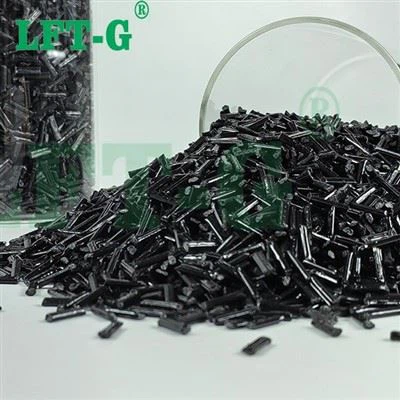
Long carbon fiber PA6 materials typically use continuous fibers or long fibers with a length of ≥5mm. The fibers are arranged in a directional manner in the matrix, forming a strong framework structure. This arrangement enables the load to be efficiently transmitted through the fibers, thereby significantly enhancing the tensile strength and rigidity of the material. In contrast, the fiber length of short carbon fiber nylon 6 material is generally less than 1mm, randomly dispersed in the nylon matrix. Although it can also enhance the rigidity and strength of the material, due to the short fiber length and disordered distribution, the reinforcing effect is relatively limited. The main function of short carbon fibers is more to improve the wear resistance, dimensional stability and creep resistance of the matrix, rather than to provide extremely high mechanical load-bearing capacity.
Comparison of mechanical properties
The tensile strength and modulus of long carbon fiber PA6 material in the fiber direction are much higher than those of short carbon fiber PA6 pellets, and can even rival some metal materials. Therefore, it has important applications in aerospace, high-end sports equipment and other fields. However, the performance of long carbon fiber PA6 composites shows obvious anisotropy, that is, they have extremely high strength in the fiber direction but may be relatively weak in the vertical direction. Short carbon fiber PA6 compound resin, due to the random distribution of fibers, has mechanical properties closer to isotropy and is suitable for applications with high uniformity requirements.
In terms of impact resistance, short carbon fiber PA6 composites usually perform better. Short fibers can absorb energy through plastic deformation when subjected to impact, while long carbon fiber PA6 polymer, due to their continuous fibers and higher brittleness, are prone to fracture under severe impact. Therefore, short carbon fiber PA6 materials are more suitable for applications that require a balance between strength and toughness, such as automotive interior parts or electronic casings.


Application Range of LCF PA6 Materials
Automotive industry (High-end and performance-oriented)
Structural components: chassis reinforcement parts, suspension connecting rods, drive shafts, etc. for racing cars or high-performance vehicles.
Battery pack assembly: The battery casing and bracket of an electric vehicle.
Thermal management components: High-temperature resistant brackets around the engine.
Sports equipment and outdoor gear
Bicycle: High-end frame, front fork, wheel hub.
Rackets and snow equipment: tennis rackets, skis, trekking poles, etc.
Water equipment: rowing blades, diving equipment stands.
Industrial Machinery and Automation
Robotic arm and robot components: lightweight joints, connecting rods.
High-end molds: Injection mold inserts.
Conveying system: High-speed conveyor belt support, guide rails.
Aerospace and unmanned aerial vehicles
Structural components: Long carbon fiber PA6 composites are used to manufacture unmanned aerial vehicle arms, fuselage frames, spacecraft brackets, etc., replacing metals to reduce weight while maintaining high strength and rigidity.
Interior parts: In passenger aircraft or satellites, they are used for lightweight brackets, panels and other non-load-bearing but highly rigid components.
Differences in application fields
Long carbon fiber PA6 composites, with their extremely high specific strength and specific modulus, are mainly applied in fields with extremely high requirements for lightweight and high strength, such as unmanned aerial vehicle structural components, high-performance bicycle frames, and racing car parts. In these scenarios, the weight and rigidity of the material are of crucial importance. Long carbon fiber PA6 can effectively replace part of the metal structure while reducing the overall weight.
Short carbon fiber PA6 material is more suitable for industrial general-purpose parts, such as mechanical gears, bearings, and power tool housings. These applications not only require certain strength and rigidity, but also demand that the materials have good wear resistance, anti-static performance and ease of molding. Short carbon fiber PA6 material can reduce production costs while ensuring performance. In the absence of higher requirements, short carbon fiber is still chosen as the starting point for initial trials in the manufacturing industry at present.
Cost and Economy
The raw material cost of long carbon fiber PA6 material is relatively high, and the processing procedure is complex with strict equipment requirements. Therefore, the overall cost will be higher than that of short carbon fiber PA6 pellets.
Short carbon fiber PA6 materials have a wide range of raw material sources and mature processing techniques, making them suitable for large-scale production. Therefore, they are more competitive in cost-sensitive industries such as consumer electronics and household appliances. Meanwhile, the waste of short carbon fiber PA6 materials can be re-granulated and reused, which is in line with the trend of sustainable development.

Conclusion
Long carbon fiber PA6 composites and short carbon fiber PA6 materials each have their own advantages, and the choice of which material to use depends on the specific application requirements. If you pursue the ultimate mechanical properties and lightweight, and have a sufficient budget, long carbon fiber PA6 is an ideal choice. If more attention is paid to cost, molding flexibility and comprehensive performance, short carbon fiber PA6 is more suitable. In the future, with the advancement of composite material technology, the processing cost of long carbon fiber PA6 materials is expected to decrease. More manufacturers are beginning to consider long carbon fiber nylon 6 materials when pursuing high-quality products, and the market for long carbon fiber reinforced pa6 materials is gradually expanding. These two materials will continue to play an important role in different industrial fields.