

Using Kevlar, an aramid fiber commonly used in the field of bulletproofing, in kayaks ensures that well-constructed boats can resist cracking and fragmentation. When graphene and carbon fiber are used in canoes and hulls, they not only increase the strength and weight of the hull but also increase the glide distance.

Golf club
In 1972, the United States first used carbon fiber composite materials to make golf clubs, and by 1998, the number of carbon fiber golf clubs was more than steel. Golf clubs consist of a grip, body, and head. Golf clubs made of carbon fiber composite materials can reduce their weight by about 10% to 40%. According to the law of conservation of momentum, when the total weight of the golf club is given, the weight of the head club is lighter than that of the swing speed, which can make the ball obtain a larger initial speed. In addition, the high-damping properties of the carbon fiber composite allow the ball to be hit longer and farther.

The development trend of tennis rackets is a large size and lightweight. At present, most of the high and middle tennis rackets in the world are made of carbon fiber composite materials. The big rackets are made of carbon fiber composite materials that are light, strong, and larger than the mold. They can withstand the strain of the net cable more strongly than wooden frames to keep the ball in place. Carbon fiber composite material with good damping and vibration can not only give athletes comfort but also make the tennis ball get a larger initial speed.

In archery, improving the performance of archery equipment is an important way to improve the performance of archery, and the main way to improve the performance of the equipment is to improve the specific elasticity of the arrow. The best bow in the world today is the carbon fiber composite material series product. The bow arm (bow piece) made of carbon fiber composite material can withstand the bending stress of 50 kg/Hun2, giving the arrow the maximum initial speed and the longest range. The fatigue resistance of carbon fiber composite material is incomparable to that of FRP and metal materials, so the service life of the bow arm is longer.

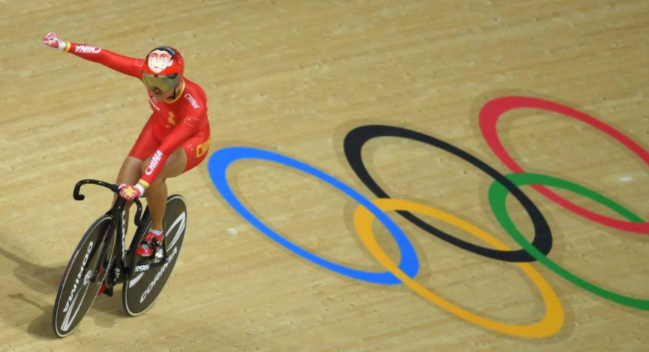
There are several cycling events at the Olympics, each with very different equipment. But whether competitors ride brake-free track bikes with solid disc wheels, the more familiar road bikes, or the highly durable BMX and mountain bikes, these devices have one feature - CFRP frames.
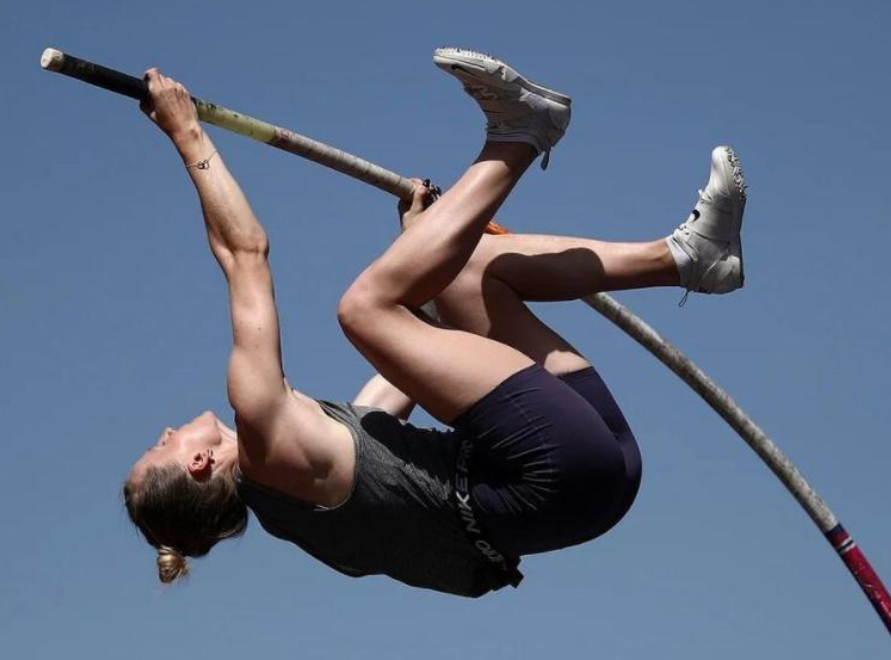
For pole vaulting, athletes rely on two factors to push them as high as possible over the horizontal bar -- a solid run-up and a flexible pole. Pole vaulters use GFRP or CFRP poles. In the 1960s, athletes began to use nylon poles, which were soon replaced by fiberglass poles. The continuous reform of pole materials has made the world record repeatedly brushed. Now the pole has developed into the fourth generation, glass fiber and nylon have been replaced by carbon fiber composite materials with better performance, and the material of different parts can be designed according to the difference in the stress of the pole so that the overall performance is optimal. The latest carbon fiber pole can ensure that the pole is flexible and strong without breaking or kinking. It can convert the kinetic energy of the athlete holding the pole in the fast run-up into the elastic deformation energy of the pole. When the pole is bent to the maximum arc, the elastic deformation energy is released and converted into the athlete's potential energy, which helps the athlete to jump in the air and fly over the cross pole.
More and more sports equipment manufacturers are using composite materials because they increase strength and reduce the weight of equipment, which helps athletes perform faster and better in competitions.
It can be said that the modern Olympic Games is no longer a pure competition between athletes running faster, jumping higher, and lifting heavier. Behind the competition between athletes, it is a comprehensive competition between countries of technological development and cohesion of people. The records of the Olympic Games are not only the embodiment of humans breaking through physiological limits but also the concentrated display of scientific and technological innovation in sports.