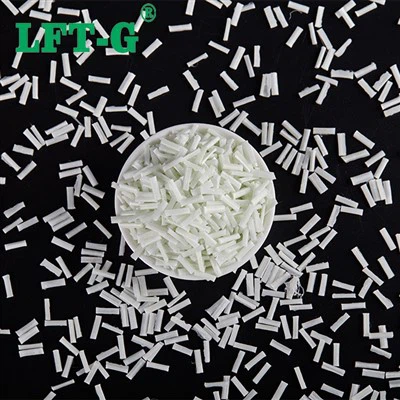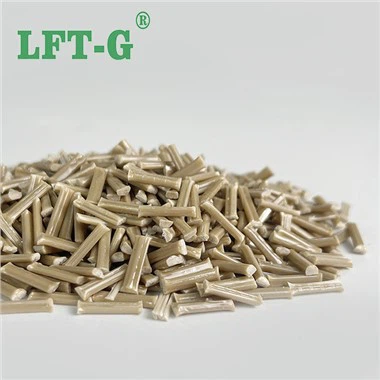

The manufacture of wind turbine blades has been based on thermoset composite technology. However, thermoplastic composites offer recyclability and other advantages. When reinforced thermoplastics are used to produce rotor blades, they offer significant advantages over thermosets. First, thermoplastics are plastic when heated and retain plasticity unlike permanent thermosetting plastics. Therefore, at the end of the service life, thermoplastic blades can be molded by heating and recycling. Assuming that blade manufacturing now uses hundreds of thousands of tons of composite materials each year, this will create an increasingly important market benefit.
1. Advantages and disadvantages
Advantage 1: Recyclable
At the end of its useful life, thermoplastic blades can be heated to form something for recycling.
Advantage 2: Short curing cycle
Thermoplastics also solve the obstacles to the curing cycle, which now slow down the production speed of thermoset blades. Molded blades can be demolded under heating, further accelerating the production process. Components can be co-cured or connected by heating the local interface and welding. Small parts can use pellet injection molding.
Advantage three: strength and rigidity are higher
Reinforced thermoplastics can be stronger than thermosets at the same weight, which results in a lighter structure. The optimization of blade design for these plastics can result in different configurations. For example, by designing a blade to make it more like an airplane wing, reinforced with ribs and beams, designers can eliminate many of the structural cores currently used in blades. Foams and other core materials absorb the resin, adding weight and cost, and must be shaped.
In use, its resistance to rain, snow, etc. is better than that of thermosetting plastics, and it usually has higher damage tolerance and slower crack growth. Due to its more prolonged properties, thermoplastics have better impact resistance and tend to show visible dents. Unlike thermoset composites, they are hidden in laminates and do not show defects on the surface.
Disadvantage 1: poor fatigue resistance
The fatigue properties of reinforced thermoplastics are rather poor because of the weaker connection between the fibers and the plastic matrix. The connection between the two is mechanical. It is the contraction of the matrix resin around the fiber during the curing process, not the chemical connection. Conventional coupling agents are used to improve the bonding of glass fibers, carbon fibers, and thermosetting resins, but have little effect on thermoplastic resins.
Disadvantage 2: Heat/wet performance is generally worse than thermoset resin
The hot/wet properties are generally inferior to those of the thermosetting resins because the hot moisture expands the matrix and loosens the mechanical connections, causing the matrix molecular chains to slide along the fibers. In addition, most thermoplastic resins are difficult to process, and their higher viscosity in the molten state means that higher processing temperatures and curing pressures are required to ensure that the resin can penetrate completely into long-fiber continuous fibers. Due to the need for metal molds and high energy consumption, the cost rises.
2. Research status at home and abroad
Foreign: Green Blade Project of Eire Composites
In Ireland, the composite technology research unit at Galway State University, the research team at Limerick University and the commercial company Eire Composites have further studied this latest technology. Both universities have extensively studied APLC-12 composites, and Eire Composites has been actively developing liquid forming technology for the production of thermoplastic composite wind turbine blades and nacelle covers. In the Green Blade project, Eire Composites is leading a collaboration (through its subsidiary, EireCompositeTeo), which includes Mitsubishi Heavy Industries, Ahlstrom Fiberglass, and Cyclics, to jointly develop and manufacture a 12.6 meter long blade sample, and carry out testing. This work will naturally lead to the future development and certification of full-size thermoplastic composite blades.
Foreign: Danish Blade Company's new blade technology development project BladeKing
Among several large blade manufacturers, the Danish company LM, which closely follows this work, is the world's largest manufacturer of wind turbine blades. The company under normal circumstances can hardly make the blade production quick enough to meet the requirements, so it wants to cut the current production cycle by half and as part of its latest blade technology development project BladeKing. The company has been attracted by the ability of thermoplastics to reduce production cycles, and it can serve as a possible key to bring new plastics to market by 2015. In order to produce very large blades for future offshore wind turbines, high levels of automation are also needed. This is another focus of the BladeKing project: using automated fiber plies or tape layers to speed up the lamination of fibers in the mold. RisoDTU and Aalborg University conducted research on the BladeKing project together with LM, and the Danish National Advanced Technology Fund provided partial sponsorship.
Domestic: Zhongke Hengyuan cooperates with RTP to develop long fiber reinforced thermoplastic blades
Hunan Zhongke Hengyuan Wind Power Industry Technology Co., Ltd. designed and manufactured small wind turbines suitable for areas not supplied by the grid. The company uses long glass fiber reinforced thermoplastics from RTP Corp. of the United States to inject molded wind turbine blades. According to reports, the company cooperated with RTP to develop and use very long fiber reinforced products because they have the highest strength/weight ratio in injection molding materials. Long glass fiber reinforced materials provide high modulus and impact resistance, maintaining the shape of the blade regardless of environmental conditions. Excellent dimensional stability can effectively prevent the blades from changing the windward angle, which greatly improves the efficiency of the turbine, especially in very humid and very dry conditions.
3. Summary
The accelerated development of the global wind power market has enabled blade suppliers not only to expand their capacity but also to find technologies to speed up the production process to meet future demand. The potential advantages of thermoplastic resins can help them achieve this, while also strengthening the structural feasibility of very large blades and resolving the reproducibility of blades after retirement. For the wind energy field, these real plastics can prove to be a revolutionary technology due to the increasing demand.