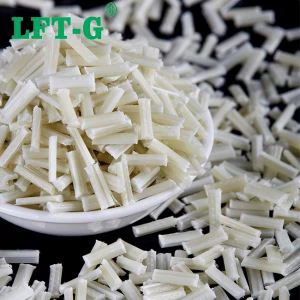

1.Filter mesh is too low or not enough
■This phenomenon often occurs when the head pressure is insufficient, external impurities and internal impurities.
2.Continuum problem
■A series of pellets that stick to each other and are often called duplex or pellet chains.
The reason may be that the processing water temperature is too high or the water flow speed is too low.
Continuous particle refers to the situation where a series of particles are connected to each other, that is, in some cases, the particles are connected together through the film end-to-end or tangentially. In the process of processing, several technological problems may cause this phenomenon alone or together. For example, too hot processing water is a cause of continuous particles. In this case, the temperature of the water should be lowered to give sufficient cooling to the surface of the particles; in addition, the low water flow rate is also a cause of continuous particles, which can cause particles to cut. The particle chamber slows down, and particle reunion occurs. In addition, if the holes of the die head are too close, the expansion of the outlet during processing will cause particles to touch. The solution is to replace the existing die head with a large spacing die with few holes.
3.Tailing problem
■The so-called tailing is that the edge of the particle is slightly protruding. The cutting edge is like a hockey stick. It looks like a contaminant or tear at the bottom of the cut. The reason for this is that the cutting device fails to cut cleanly here. In general, the correct cutting particles from the wire pelletizer should be a right-angled cylinder, and the correct cutting particles from the underwater pelletizer should be a nearly perfect sphere.
In general, materials that are less prone to end-of-material will also generate end-of-material due to tailing. Assuming that all processing parameters have been checked, tailing may generally be diagnosed as a cutting problem. For the wire pelletizing production line, the solution is to replace the hob and the bottom knife to provide a new and sharp cutting edge; or re-determine the equipment spacing according to the values specified in the manufacturer's manual. For underwater pelletizing lines, the template and blade need to be checked to ensure that there are no nicks, because nicks and grooves often cause tailing.
4.Powder problem
■For many crystalline materials, such as general-purpose polystyrene, feedstock appears to be a common and unique hazard. They become a problem for processors because they change the bulk density of the material, degrade or scorch in the barrel of the extruder, and cause trouble for the conveying process. The main goal of the resin manufacturer is to produce a uniform particle shape, that is, with a predetermined length and diameter, without pollution from the end of the material or foreign substances.
To solve this problem, the purpose of reducing the end of material can be achieved by adjusting the equipment and controlling some important process parameters. When entering the cutter, the temperature of the strand production line should be as close as possible to the Vicat softening point of the material to ensure that the strand is subjected to hot cutting as much as possible to avoid cracking.
For a specific polymer, choosing a hob with proper pelletizing angle plays an important role in reducing the end of material. For unfilled polymers, use Stellite or tool steel hobs as much as possible, and keep the cutting edges of the hobs and bedknives sharp to avoid breaking the polymer. For the subsequent equipment after pelletizing, whether it is pressurized or vacuum equipment, avoid entrapment of air.
For the underwater pelletizing line, make sure to maintain enough knife pressure against the die surface during processing, and adjust the residence time after pelletizing to ensure that the particles are hot when entering the dryer.
5.Broken knife problem
■The bottom knife of the pelletizing equipment is a hard carbonized steel sheet with Invar alloy welded in its proper position, which enables it to be installed on the support through threads. Usually, the blade will break when the blade edge of the blade rotates. For this, appropriate measures can be taken to avoid this problem. In this process, you must carefully follow the method recommended by the manufacturer's equipment manual. Here, it is important to emphasize that the threaded Invar alloy mandrel is fixed in place by silver welding. It has a shear limitation and is easily damaged by excessive torque during installation. In addition, during rotation or installation, the broken bottom knife is prone to displacement, and will be scattered in the pelletizer, destroying the blade of the hob, and increasing maintenance costs.
6.Wire drift problem
■The strand drift is the tendency of the strand to be bundled sideways on the feeding platform. It can cause problems such as poor pellet quality, slender strips, and processing disturbances. If the cutting plane of the pelletizer is not parallel to the extrusion die plate of the extruder, the strands will tend to be crowded to the left or right, eventually causing the strands to drift. In addition, other causes of wire drift include the gap between the underfeed roller and the scraper, and the inconsistent diameter of the underfeed roller.
7.Linear control problem
■
The slender strip is a kind of abnormal product produced by the pelletizer. As the name implies, its length is longer than the conventional particle size, and the grown size usually varies within a few inches. The appearance of elongated strips (also known as oblique cutting particles) indicates that the wire posture control is not good when the wire is fed into the hob, specifically because the wire is not at a vertical angle when fed into the hob, so When cutting, there will be an inclined angle at the end of the strand.
The distance between the feed roller (biting point) and the hob (cutting point) is called the indentation distance, and there is nothing to control the strand in this span. The pelletizer is different from the wood planer. If the feeding roller is installed incorrectly or the working conditions are poor, the plastic strands will not be fed into the cutting device at an angle perpendicular to the cutting surface, so that the strands start to cross each other. , Causing further deterioration of the cutting quality, which eventually caused serious problems. The crossed strands will force the two feed rollers to separate from each other, causing the strands to lose tension, which in turn will cause the strands to sag temporarily, biasing the strands toward the sides of the feed rolls. The early warning signal of the above problem is that the upper feeding roller is in a bad working condition, and there are grooves, cracks or discoloration (aging or hardening due to heat) and other phenomena.
In the underwater pelletizing system, the main reason for the production of slender strips is that the feeding speed does not match the cutter speed. In this case, it is necessary to increase the cutter speed to match the feed speed, or reduce the feed speed to match Cutter speed. In addition, during the process, it is necessary to ensure that there are enough blades on the cutting head to ensure that the particles have the correct geometry, and check whether there are mold holes that slow or block the polymer flow.