
LGF30 PPS Enginering Plastic
Know about LGF30 PPS Material
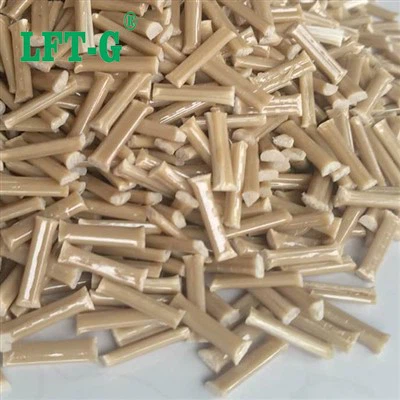
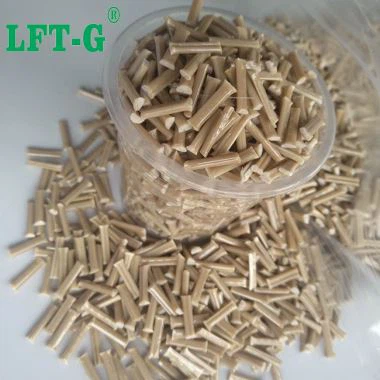
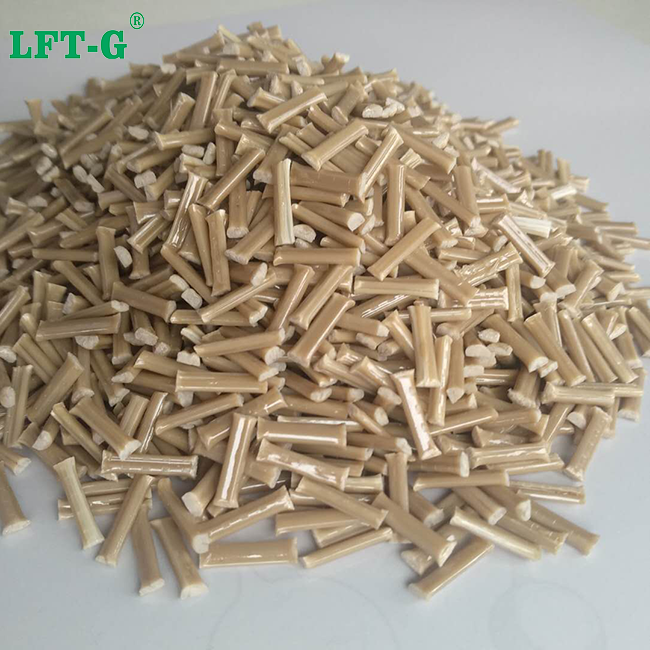
LGF30 PPS (Long Glass Fiber Reinforced Polyphenylene Sulfide) is a high-performance engineering plastic particle made by compounding polyphenylene sulfide (PPS) as the matrix and through a special long fiber reinforcement process. This material maintains the inherent high-temperature resistance, chemical corrosion resistance, and dimensional stability of PPS, and by introducing 30% long glass fibers, significantly enhances the structural performance and long-term reliability.

Compared with traditional short glass fiber PPS materials, LGF30 PPS forms a continuous fiber framework structure inside the product, which gives it higher stability and consistency in terms of load-bearing capacity, impact resistance and creep resistance. This structural advantage enables it not only to replace traditional metal materials, but also to provide greater freedom of design in complex structural designs.
The materials are usually provided in granular form and are suitable for mainstream processing techniques such as injection molding. They are widely used in industrial fields where high requirements are imposed on strength, heat resistance and corrosion resistance.
LGF30 PPS: Key Features
LGF30 PPS engineering plastic is reinforced with long glass fibers, enabling the material to achieve higher levels in all performance aspects.
The long fibers form a continuous load-bearing network in the product, enabling stress to be transferred over a wider range, thereby significantly enhancing the overall structural strength. This structure not only improves the initial performance but also maintains a stable performance under long-term loading conditions.
Outstanding high-temperature resistance performance
Excellent dimensional stability and low warpage
Excellent resistance to chemical corrosion
Outstanding anti-rust and fatigue resistance performance
High temperature resistance
PPS itself is a kind of high-temperature resistant engineering plastic. In the LGF30 structure, its thermal performance is further enhanced.
Dimensional stability and low warpage
The long glass fiber reinforced system effectively reduces the uneven shrinkage problems of the material during processing and usage by constructing a three-dimensional structural network.
Chemical corrosion resistance
The PPS matrix endows the material with extremely strong chemical stability, enabling it to maintain stable performance even in environments where high temperatures and corrosive media coexist.
Fatigue resistance
The long glass fiber reinforced structure significantly improves the deformation problem of the material under long-term loads. The fiber network can disperse stress concentration, enabling the material to maintain dimensional stability under continuous loading conditions.
|
Physical
|
Typical Characteristic
|
Unit |
Testing Standard
|
|
Specific Gravity
|
1.40~1.60 |
g/cm³
|
ASTM D-792
|
|
Tensile Strength
|
140~160 |
MPa
|
ASTM D-638
|
|
Tensile Modulus |
13000~14000 |
MPa
|
ASTM D-638
|
|
Flexural Strength
|
210~230 |
MPa
|
ASTM D-790
|
|
Flexural Modulus
|
13000~14000 |
MPa
|
ASTM D-790
|
|
Deflection Temperature
(1.8MPa)
|
260~270 |
°C
|
ISO 75-2
|

Automotive Industry
LGF30 PPS is widely used in automotive high-temperature and structural components:
Pump housing
Thermostat assembly
Cooling system impeller
Sensor housing
Its heat resistance and corrosion resistance properties make it suitable for use in coolant and fuel environments.
Electrical & Electronics
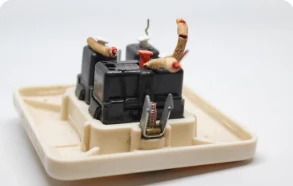
High-temperature connector
Relay housing
Insulation structural component
The flame-retardant property and dimensional stability of the material make it suitable for highly reliable electronic systems.


Industrial Equipment
Pump body and valve assembly
Fluid transportation system
High-temperature mechanical components
Provide stable performance under complex conditions.
New Energy & Emerging Applications
Battery structural components
Thermal management system components
Power module support components
Meet the dual demands of high temperature resistance and lightweighting
Processing Characteristics
LGF30 PPS compound resin has been specially designed for injection molding processes. Its high fluidity ensures the filling capacity for complex structural components, while also taking into account the protection of long fibers.
Key processing points:
Low shear design: Prevent excessive shear that could cause fiber breakage and affect performance
Reasonable gate design: Ensure uniform fiber orientation and improve structural consistency
Screw structure optimization: Avoid unnecessary losses caused by mismatch
Frequently Asked Questions
Is LGF30 PPS suitable for long-term high-temperature environments?
+
-
Sure. The material maintains excellent mechanical stability at temperatures above 200°C and is suitable for high-temperature applications.
What is the main difference between LGF30 PPS and GF30 PPS?
+
-
The LGF30 PPS adopts a long-fiber structure, forming a continuous load-bearing network, while GF30 has a short-fiber structure. The former performs better in terms of impact resistance, creep resistance and structural strength.
How is creep resistance compared to PA or PP materials?
+
-
LGF30 PPS shows significantly lower creep due to its rigid polymer structure and long fiber reinforcement, ensuring long-term dimensional stability under load.
What are the main processing challenges?
+
-
Controlling shear is critical to prevent fiber breakage. Higher mold temperatures are also required compared to standard thermoplastics.
Does moisture affect its performance?
+
-
No significant impact. With very low moisture absorption, LGF30 PPS maintains stable mechanical and dimensional properties in humid environments.
Hot Tags: lgf30 pps enginering plastic, China, manufacturers, suppliers, factory, buy, customized