LFT-G® PA66 LGF50 | The Ultimate Metal Replacement PA66 GF50
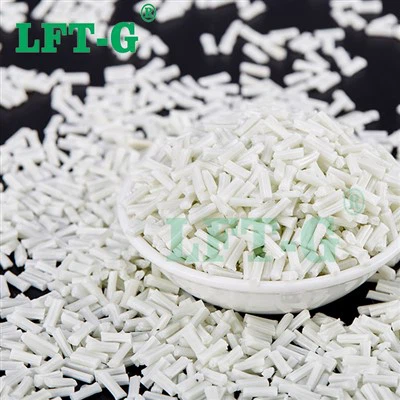
LFT-G® 50% Long glass fiber nylon66 (High Strength)
When engineers specify PA66 GF50, they are looking for the absolute limit of what plastics can do. Usually, the only alternative is die-cast aluminum. However, standard short-fiber PA66 GF50 is notoriously brittle and prone to warping. LFT-G® PA66-LGF50-NG05 is the definitive structural upgrade.
This Natural Grade (NG05) composite integrates a massive 50% Long Glass Fiber reinforcement into a high-temperature Polyamide 66 matrix. The result is a material with a flexural modulus exceeding 14,500 MPa and a heat deflection temperature near 250°C. It offers the structural rigidity of metal with the design freedom and weight savings (up to 50% lighter) of plastic, without the brittleness of short-fiber compounds.
√ Rivaling Metal Stiffness: Engineered to replace die-cast aluminum and zinc in high-load applications, eliminating machining costs and corrosion.
√ Extreme Heat Stability: The PA66 base allows continuous operation in engine environments (150°C-180°C) where PA6 or PP would fail.
√ Solves Creep & Fatigue: The entangled long-fiber network locks dimensions in place, preventing parts from loosening or deforming under sustained heavy loads.
Why Replace Metal? (Specific Strength)
Steel is strong but heavy. LFT-G® PA66 LGF50 offers a superior strength-to-weight ratio, allowing for lighter, more efficient designs.
Mild Steel
Heavy
Aluminum
Standard
LFT PA66 LGF50
Ultimate Efficiency
Typical Material Properties
The following values are typical data for LFT-G® PA66-LGF50-NG05 (Natural Grade) and are for reference only. Data is for Dry-As-Molded (DAM) state. Please contact us for the official Technical Data Sheet (TDS).
The following values are recommendations. We recommend desiccant / dry air dryers (moisture content below 0.1%).
To minimize fiber breakage and ensure optimal performance, a low-compression, general-purpose screw is highly recommended.
Parameter
Recommendation
Drying Temperature
80 - 100 °C
Drying Time
4 - 6 hours
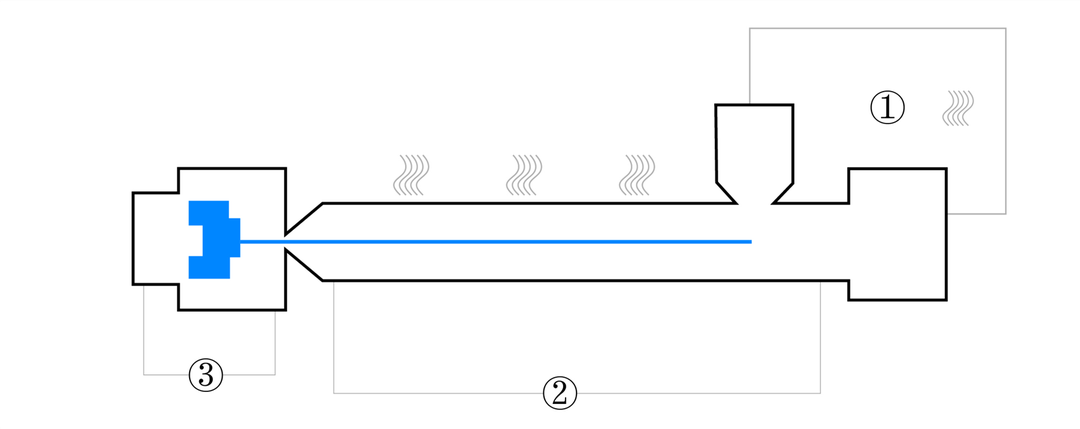
Melt Temperature (Nozzle ③)
280 - 300 °C
Mold Temperature (Zone ②)
80 - 120 °C
Back Pressure
Low (to minimize fiber damage)
Case Study: Truck Turbocharger Resonator
A heavy-duty truck manufacturer needed a resonator pipe connected to the turbocharger. The part faces 200°C air pulses, 3-bar internal pressure, and severe engine vibration.
Material Battle
PPS GF40 (Competitor): Expensive and heavy (1.65 g/cm³). Brittle during assembly.
Standard PA66 GF50: Warpage issues led to air leaks at the flange. Failed burst pressure test at 180°C.
Winner: LFT-G® PA66-LGF50 The 50% long fiber skeleton prevented warpage (0.1% shrinkage). Passed 3,000-hour heat aging and burst pressure tests. 40% Cost Saving vs PPS.
Core Industrial Sectors
Railway Fasteners
Replaces cast iron in rail clips. Must withstand 20-ton axle loads and UV exposure. LFT PA66 LGF50 offers the high compression strength to hold rails secure for decades.
High-Voltage Breakers
Internal frames for industrial circuit breakers. The material's high dielectric strength and heat resistance (250°C) prevent melting during short-circuit arcs.
Engine Mounts
Replaces aluminum brackets. Supports the engine weight while damping vibrations. The 50% fiber load ensures the mount doesn't creep or sag in the hot engine bay.
People Also Ask (Google PAA)
1. Is Nylon 66 stronger than aluminum?
A: In terms of Specific Strength (strength-to-weight), yes. While Aluminum 6061 has a higher absolute stiffness, LFT-G® PA66 LGF50 is about 50% lighter. This allows engineers to design parts that handle the same structural loads as aluminum but with significantly reduced weight, improving fuel efficiency in vehicles.
2. What is the melting point of 50% glass filled Nylon 66?
A: The melting point of the PA66 matrix is approximately 262°C. However, LFT-G® PA66 LGF50 has a Heat Deflection Temperature (HDT) of nearly 250°C (at 1.8 MPa). This means the material maintains its structural rigidity very close to its melting point, unlike unreinforced plastics which soften much earlier.
3. What are the disadvantages of PA66?
A: The main disadvantage of standard PA66 is moisture absorption, which can reduce stiffness. However, in our 50% LGF grade, the massive glass fiber skeleton dominates the mechanical properties. This significantly minimizes the effect of moisture, ensuring the part remains dimensionally stable and rigid even in humid environments, overcoming the material's natural weakness.
Ready to Replace Metal?
Upgrade to the ultimate stiffness and heat resistance of LFT-G® PA66 LGF50. Contact our material specialists today to discuss your project or request a sample.



 When engineers specify PA66 GF50, they are looking for the absolute limit of what plastics can do. Usually, the only alternative is die-cast aluminum. However, standard short-fiber PA66 GF50 is notoriously brittle and prone to warping. LFT-G® PA66-LGF50-NG05 is the definitive structural upgrade.