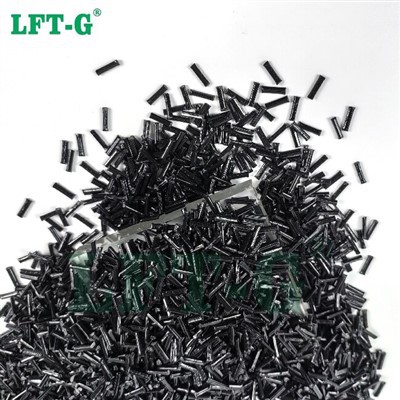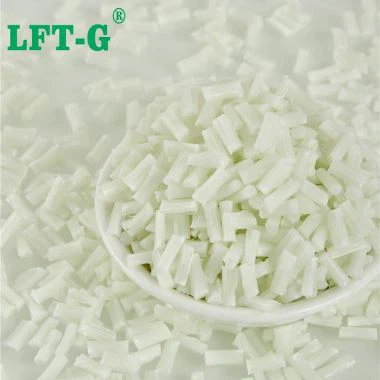


LFT-G® PA6 HLGF60 | The Maximum Strength PA6 GF60 Upgrade
LFT-G® 60% Long glass fiber PA6 (High Performance)
 For applications where even standard PA6 GF60 isn't enough, LFT-G® PA6-HLGF60 (High Performance) is the final answer. While standard 60% glass-filled nylon offers incredible stiffness, it can suffer from fiber pull-out and reduced fatigue life at such high loading levels.
This Elite Grade utilizes a proprietary Hyper-Bonding interface technology. It strengthens the adhesion between the Polyamide 6 matrix and the dense 60% Long Glass Fiber network. The result is a material with mechanical properties 10-15% higher than our standard Natural Grade (NG06), pushing the flexural modulus to levels that directly challenge steel in specific strength, making it the ultimate choice for replacing complex metal assemblies.
- √ The +15% Advantage: Superior fiber wetting and bonding translate to higher tensile strength (>250 MPa) and modulus compared to standard LGF60.
- √ Maximum Fatigue Endurance: The enhanced interface prevents micro-cracks from forming around the fibers, critical for parts under extreme cyclic vibration.
- √ Precision Molding: Designed for parts requiring extreme dimensional stability and zero warpage, effectively mimicking the behavior of machined metal.
Typical Material Properties (High Performance)
The following values are typical data for LFT-G® PA6-HLGF60 (High Performance Grade) and are for reference only. Data is for Dry-As-Molded (DAM) state. Please contact us for the official Technical Data Sheet (TDS).
Mechanical Properties
| Property | Test Method | Value (DAM) |
|---|---|---|
| Tensile Modulus | ISO 527 | 21,600 MPa |
| Tensile Strength | ISO 527 | 295 MPa |
| Tensile Strain at Break | ISO 527 | 2.3 % |
| Flexural Modulus | ISO 178 | 17,000 MPa |
| Notched Izod Impact (23°C) | ISO 180/A | 52 kJ/m² |
| Notched Izod Impact (-30°C) | ISO 180/A | 50 kJ/m² |
Thermal & Physical Properties
| Property | Test Method | Value |
|---|---|---|
| Density | ISO 1183 | 1.64 g/cm³ |
| HDT/A (1.8 MPa) | ISO 75 | 218 °C |
| HDT/C (8.0 MPa) | ISO 75 | 190 °C |
| Melting Temperature | ISO 11357 | ~220 °C |
| Mold Shrinkage (Flow) | ISO 294-4 | 0.1 - 0.2 % |
Processing Information
The following values are recommendations. We recommend desiccant / dry air dryers (moisture content below 0.1%).
To minimize fiber breakage and ensure optimal performance, a low-compression, general-purpose screw is highly recommended.
| Parameter | Recommendation |
|---|---|
| Drying Temperature | 80 - 100 °C |
| Drying Time | 4 - 6 hours |
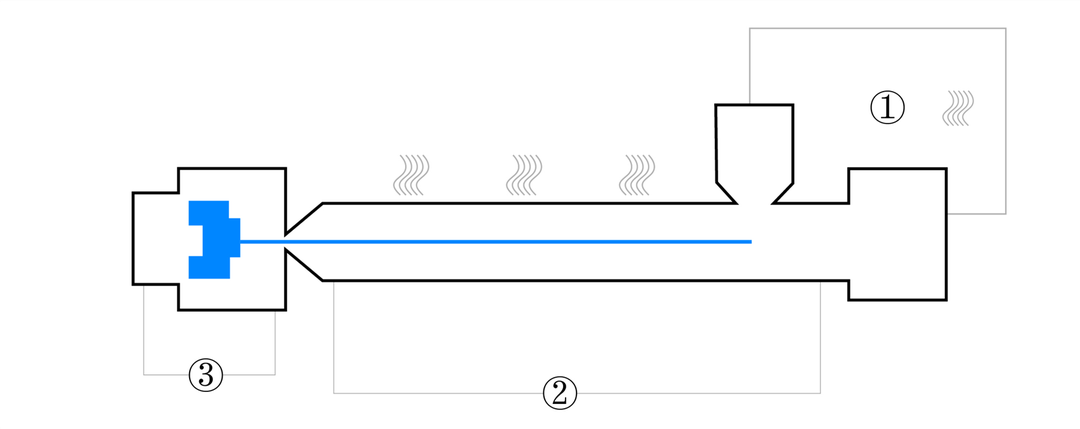
| Melt Temperature (Nozzle ③) | 260 - 290 °C |
| Mold Temperature (Zone ②) | 80 - 110 °C |
| Back Pressure | Low (to minimize fiber damage) |

Hot Tags: pa6 hlgf60 | the maximum strength pa6 gf60 upgrade, China, manufacturers, suppliers, factory, buy, customized