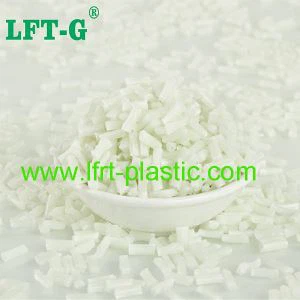


Long Fiber Nylon 6 Pellets for Sport Parts
What is long fiber materials? Long-fiber materials are a type of high-performance composite materials with long fibers (usually > 5 mm in length) as the reinforcing phase and plastics or metals as the matrix. Its core feature is that the fibers maintain a long continuity or close to the original length in the matrix, thereby significantly enhancing the mechanical strength, impact resistance and durability of the material. It is widely used in the fields of automobiles, aerospace, sports equipment, etc.

What is Long Glass Fiber Nylon 6 Material?
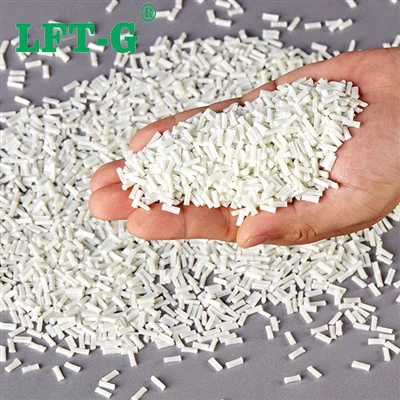
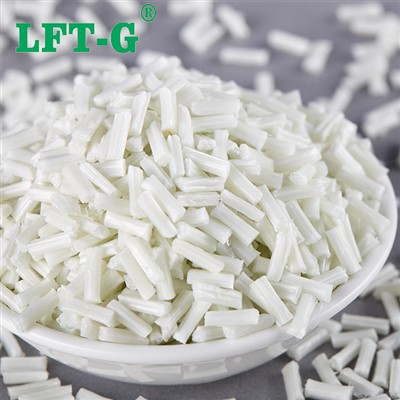
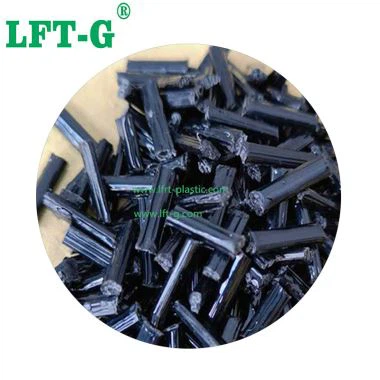
Long glass fiber nylon 6 (LGF PA6) material is a high-performance engineering plastic. By adding long glass fibers (typically over 5 mm in length, and even up to 10-25 mm) to the nylon matrix (such as nylon 6 or nylon 66), the mechanical properties and durability of the material can be significantly enhanced. Compared with short glass fiber reinforced nylon (fiber length < 1 mm), the reinforcing effect of long glass fiber is more prominent, and it is suitable for high-load and high-impact application scenarios.
The application of long glass fiber nylon 6 (LGF PA6) material in the manufacturing of sports equipment, due to its unique performance advantages, has significantly enhanced the performance and durability of the components. At present, the manufacturing materials of sports components have begun to come into contact with long-fiber materials.
Key Advantage: LGF Nylon 6 Composites
Significantly improve mechanical performance
High strength and rigidity: The addition of long glass fibers significantly enhances the tensile strength, flexural modulus and impact resistance of nylon 6 (the glass fiber content is typically between 30% and 50%). For instance, its impact resistance strength can reach several times that of ordinary nylon 6, making it suitable for components that bear high loads (such as bicycle frames and ski bindings).
Fatigue resistance: The three-dimensional network structure formed by long fibers delays crack propagation, making it suitable for components subjected to repeated forces (such as tennis racket handles and fitness equipment gears).
Lightweight design
Low-density alternative metals: With a density of approximately 1.3-1.5 g/cm³, they are lighter than aluminum alloys, which can reduce the weight of equipment (such as badminton rackets and golf club heads) while maintaining strength.
Design flexibility: Complex structures can be manufactured through injection molding, reducing the number of assembly parts (such as connectors for multi-functional fitness equipment).
Environmental resistance and durability
Chemical resistance: Resistant to sweat, cleaning agents and ultraviolet rays (stabilizers required), extending the lifespan of outdoor equipment such as rowing OARS and trekking gear.
Creep resistance: Small deformation under long-term load, suitable for load-bearing components (such as the lever of a strength training machine).
Shock absorption and comfort
High damping characteristics: Absorb vibration and enhance the feel of equipment (such as bicycle saddle brackets and treadmill pedals).
Low-temperature toughness: Maintaining performance in cold environments (such as skiing equipment, winter sports protective gear).
Application Range: Long Glass Fiber PA6 Pellets
Long glass fiber reinforced nylon 6 compound resin can be applied to manufacture a wide variety of components in the field of sports equipment.
Bicycle parts
Frame and front fork: The high rigidity and impact resistance of long glass fiber nylon can replace some aluminum alloys and reduce weight (such as the rear tripod of mountain bikes).
Pedals and cranks: Resistant to repeated stepping loads, more wear-resistant than traditional nylon, and have a longer service life.
Gear and chain guide plates: Low noise and self-lubricating characteristics, suitable for transmission systems.
Barbell/dumbbell handles: High pressure resistance and anti-slip performance, avoiding the cold touch of metal handles.
Tensioner pulleys and gears: Wear-resistant, silent, suitable for high-frequency use.
Treadmill pedals and brackets: Shock absorption and energy dissipation, reducing joint impact, and resistant to sweat corrosion at the same time.


Ball game equipment
Tennis racket/badminton racket frame: The high modulus feature enhances the rebound force when hitting the ball while reducing the weight of the swing.
Golf club head or body: Complex structural design is achieved through injection molding to optimize the distribution of the center of gravity.
Ice and snow sports equipment
Snowboard holder and ski pole handle: Maintains toughness at low temperatures (does not crack at -30℃), and has strong impact resistance.
Skate blade holder: Lightweight and highly rigid, reducing the transmission of ice surface vibrations.

Other sports accessories
Sports sole support sheet: Provides stability and elasticity.
Helmet shell or inner lining bracket: Energy absorption and buffering, reducing impact injury.
Rowing boat blades and connectors: Resistant to water corrosion and UV aging, more buoyancy friendly than aluminum alloy.
The lock and support of the trekking poles: wear-resistant and lightweight, suitable for long hikes.
Look forward to the future
Long-fiber materials, through the reinforcing effect of long fibers, far exceed traditional plastics in terms of lightweight, high strength, and impact resistance, making them an ideal choice for components of sports equipment. Its core value lies in replacing steel with plastic, while taking into account both processing flexibility and performance designability. In the future, with the optimization of processes and the reduction of costs, the application scope in the field of sports will be further expanded.
FAQ
Q: Is PA6 better than PA12 for water absorption?
A: Due to the chemical structure of PA6, it absorbs more water than PA12 pellets. The water absorption rate of PA6 is higher than that of PA12, and pa12 maintains better stability under humid conditions. For humid environments, PA12 materials is superior.
Q: What is the difference between GF and LGF?
A: The main difference between GF and LGF lies in the fiber length and performance. GF uses short fibers (<1mm), while LGF uses long fibers (5-25mm). LGF is suitable for demanding structural applications. GF provides reinforcement for simpler components.
Q: Why choose lgf pa6 materials?
A: LGFPA6 delivers metal-like strength, superior impact/fatigue resistance, and lightweight performance for sports applications. Cost-effective alternative to metals with excellent processability.
LFT-G® has nylon materials of various contents. If you want to know more relevant information, you can contact our material experts. Click below,
Technical Data: LGF PA6 Compound Resin
This article presents the technical data of long glass fiber pa6 material to you. This material is highly favored when applied to moving parts. These data fully demonstrate the excellent performance of LGF Nylon 6 materials.
Mechanical PropertiesProperty |
Value | Unit | Test Standard |
|---|---|---|---|
| Tensile Strength | 160-180 | MPA | ISO 527 |
| Tensile Modulus | 10000-11000 | MPA | ISO 527 |
| Elongation at Break | 1.5-3 | % | ISO 527 |
| Flexural Strength | 250-260 | MPA | ISO 178 |
| Flexural Modulus | 7800-8000 | MPA | ISO 178 |
| Notched Izod Impact Strength | 25-35 | kJ/m² |
ISO 180
|
Other Properties
| Property | Value | Unit | Test Standard |
|---|---|---|---|
|
Molding Shrinkage
|
0.1-0.5 | % | ASTM D-955 |
| Melting Temperature | 240-270 | °C | |
|
Deflection Temperature (1.8 MPA) |
200-210 | °C |
ISO 75-2
|
Hot Tags: long fiber nylon pellets for sport parts, China, manufacturers, suppliers, factory, buy, customized