

High‑Stiffness Long Glass‑Reinforced PBT Composite
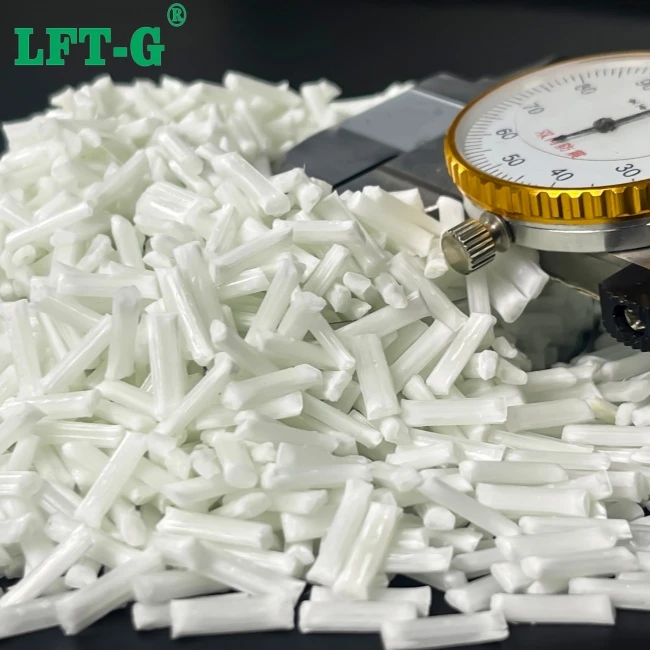
LFT‑G® PBT LGF20 delivers exceptional flexural modulus and creep resistance with significantly higher stiffness than unreinforced or short‑fiber PBT grades. The 20% long glass fiber network ensures outstanding dimensional stability across a wide temperature range, making it a reliable choice for precision‑engineered components.
This compound is ideal for electrical connectors, automotive sensor housings, industrial gears, and appliance structural parts. It resists oils, greases, fuels, and most organic solvents, while maintaining excellent dielectric strength and low moisture uptake. As a lightweight, corrosion‑free alternative to metal and thermoset components, it enables thinner wall designs, faster cycle times, and reduced system cost without compromising performance.
Why PBT LGF20 For Your Project?
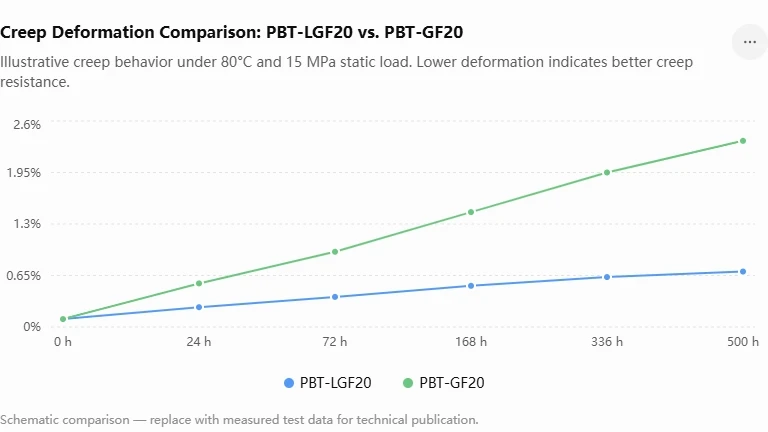
Creep Deformation Comparison: Long Glass PBT‑LGF20 VS Short Glass PBT‑GF20 (80℃, 15MPa Static Load)
- Superior Structural Rigidity – Long glass fiber reinforcement delivers high flexural modulus and load‑bearing capacity, enabling thinner, lighter part designs without sacrificing strength.
- Excellent Dimensional Stability – Low warpage and predictable, isotropic shrinkage ensure tight tolerances for precision mating surfaces and snap‑fit assemblies.
- Outstanding Electrical Insulation – Maintains high dielectric strength and volume resistivity, making it ideal for high‑voltage connectors, relay bases, and motor insulation components.
- Broad Chemical Resistance – Resists automotive fluids, oils, greases, and organic solvents, ensuring reliable performance in harsh under‑hood and industrial environments.
- High Flowability & Processability – Excellent melt flow and rapid crystallization enable complex, thin‑walled geometries with short cycle times and high production efficiency.
Key Application Areas
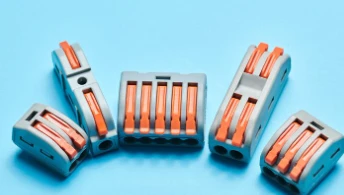
High‑Voltage Electrical Connectors & Busbars
EV battery connectors, high‑pin‑count board‑to‑board connectors, and busbar insulation housings. PBT LGF20 delivers excellent dielectric strength (CTI > 600V) and low moisture absorption, ensuring reliable signal integrity and tracking resistance in high‑humidity, high‑temperature electrical environments.
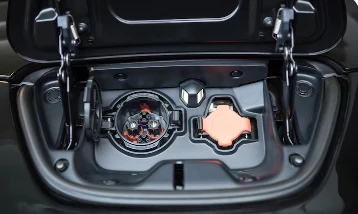
Automotive Sensor & Actuator Housings
Position sensors, pressure transmitters, throttle position sensor bodies, and actuator covers. Outstanding thermal stability (HDT ~200°C) and oil resistance ensure long‑term reliability in engine compartments, while low warpage maintains precise sensor alignment.
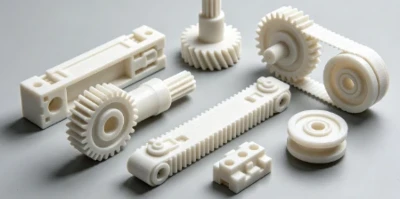
Precision Gears & Motion Control Components
Helical and spur gears, cam followers, and conveyor system rollers. The long glass fiber network provides high fatigue resistance and minimal creep under cyclic loads, ensuring accurate motion transmission and extended service life in automated equipment.

Appliance & Consumer Electronics Structural Parts
Washing machine pump housings, dishwasher spray arms, power tool frames, and laptop hinge supports. Exceptional flowability enables complex, thin‑wall designs, while high stiffness and creep resistance maintain structural integrity over millions of operational cycles.
Injection Molding – Quick Reference

This injection molding quick reference sheet is specifically formulated for LFT long fiber reinforced thermoplastic materials. All recommended parameters and equipment configurations focus on low‑shear molding to preserve fiber length.
The metering screw with an 18:1–22:1 L/D ratio, large open nozzle and free‑flow check valve greatly reduce fiber breakage. This preserves the critical fiber length needed to achieve the full mechanical performance of the finished product.
Standardized pre‑drying, stable melt temperature, and controlled mold temperature eliminate surface defects and ensure consistent part quality. Purge the barrel with PE or PP before shutdown to prevent material degradation and nozzle clogging.
- Pre‑drying: 3‑4 hrs @ 120‑130°C (desiccant dryer, moisture < 0.04%)
- Melt Temperature: 240‑260°C
- Mold Temperature: 80‑100°C
- Injection Pressure: 60‑110 MPa
- Screw L/D: 18:1‑22:1, metering type
Note: Use a large open nozzle and a free‑flow check valve to minimize fiber breakage. PBT is hygroscopic – ensure thorough drying before molding. Purge with PE or PP before shutdown to prevent material degradation.
FAQ
Q: What are the key advantages of PBT LGF20 over standard PBT grades?
A: LFT‑G® PBT LGF20 offers significantly higher stiffness, creep resistance, and dimensional stability compared to unreinforced or short‑fiber reinforced PBT. The 20% long glass fiber network provides superior load transfer and impact strength, making it suitable for structural and precision applications where standard PBT would lack rigidity or warp under load.
Q: Is PBT LGF20 suitable for electrical and electronic applications?
A: Yes. PBT LGF20 maintains high dielectric strength and volume resistivity even in humid environments, with CTI values exceeding 600V. It is widely used in high‑voltage connectors, relay bases, and motor insulation components requiring reliable electrical performance and dimensional stability.
Q: What processing considerations apply to PBT LGF20?
A: Pre‑drying at 120‑130°C for 3‑4 hours is required to achieve moisture content below 0.04%. Melt temperature should be maintained between 240‑260°C, with mold temperature at 80‑100°C to ensure optimal crystallization and minimal warpage. A metering screw with a free‑flow check valve and large nozzle orifice is recommended to preserve fiber length and optimize mechanical properties.

Contact: Emily
Email: sale04@lfrtplastic.com
WhatsApp / Mobile: +86 188 5034 4811
Hot Tags: high‑stiffness pbt lgf20 reinforced plastic pellets, China, manufacturers, suppliers, factory, buy, customized


