

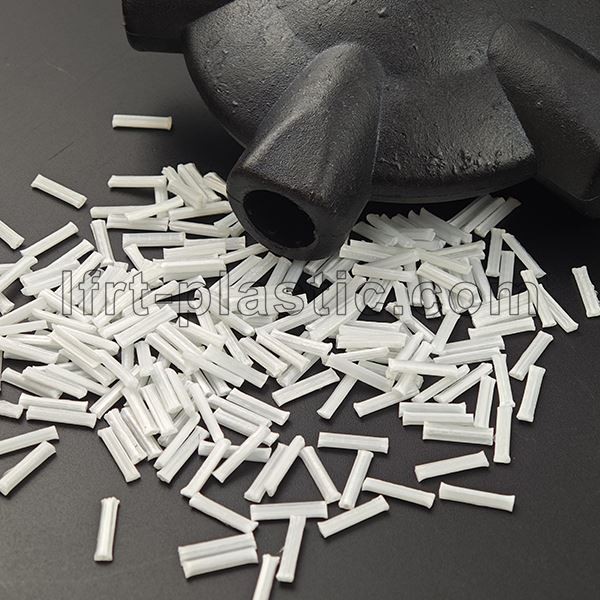
Long Glass Fiber GF30 ABS Composite
LGF ABS Materials: Comprehensive Understanding
30% Long Glass Fiber (LGF) Acrylonitrile Butadiene Styrene (ABS) is a high-performance thermoplastic composite that offers a significant leap in mechanical strength, stiffness, and impact resistance compared to unreinforced ABS and its short glass fiber (SGF) counterparts. This engineered material is created by embedding long strands of glass fibers within an ABS matrix, resulting in a composite that bridges the gap between conventional plastics and metals in a wide array of applications, from automotive components to consumer electronics and sporting goods.
The key to LGF ABS's enhanced performance lies in the length of its reinforcing fibers. Unlike SGF composites where fibers are typically less than 1 mm long, the glass fibers in LGF composites are equal in length to the pellets they are supplied in, often ranging from 5 to 25 mm. During injection molding, these long fibers intertwine to form a robust internal "skeleton" within the molded part, providing superior load distribution and energy absorption.
LGF ABS: Advantages and Disadvantages

Advantages:
Enhanced mechanical properties: Excellent tensile strength and bending strength, high modulus, and outstanding impact resistance.
Improved thermal performance: The heat distortion temperature has been enhanced, enabling its use in more demanding thermal environments.
Outstanding anti-rheological properties: This long fiber network is capable of effectively resisting deformation that occurs over time under continuous load.
High dimensional stability: Compared to the non-enhanced type and the vulcanized glass fiber reinforced plastic, it has lower shrinkage rate and warpage.
Outstanding surface treatment effect: Despite containing a high proportion of fibers, LGF30 ABS material can still present a good surface appearance.
Design flexibility: Capable of manufacturing complex geometric shapes with high strength-to-weight ratio.
Metal substitution possibility: Its outstanding performance makes it a feasible and lightweight alternative to cast metal in numerous applications.
Disadvantages:
Higher Cost: LGF30 ABS plastic pellet is generally more expensive than unreinforced ABS and SGF ABS composite due to the more complex manufacturing process.
Processing Challenges: Requires careful control of injection molding parameters to maintain fiber length and achieve optimal properties.
Anisotropy: The orientation of the fibers during molding can lead to anisotropic properties, meaning the material's strength can vary depending on the direction of the applied force.
Abrasiveness: The glass fibers can cause wear on molding equipment over time.
Fiber Handling Concerns: During secondary operations like machining or grinding, airborne glass fibers can be a respiratory hazard, requiring proper ventilation and personal protective equipment.
The challenges faced by LGF30 ABS Material
During the injection molding process of LGF30 ABS material, various challenges are encountered. To ensure that the material's properties are not affected, the next challenge lies in maintaining the length of the fibers during the injection molding process. To achieve this, special measures need to be taken to minimize the occurrence of fiber breakage:
Low-Shear Screws: Modified screw designs with lower compression ratios are used to reduce the mechanical stress on the fibers as they are conveyed and melted in the injection molding machine.
Optimized Gate and Runner Systems: The design of the mold's runner and gate system is critical. Gentle curves and larger gate sizes help to prevent fiber attrition as the molten composite flows into the mold cavity.
Controlled Processing Parameters: Lower screw speeds, back pressures, and injection speeds are employed to further minimize fiber damage.
Successful processing results in a molded part where the long glass fibers are oriented and entangled, forming the reinforcing internal network that delivers the material's exceptional properties.
GF30 ABS: A Wide Spectrum of Applications
The unique combination of properties offered by 30% long glass fiber reinforced acrylonitrile butadiene styrene (LGF30 ABS) plastic pellet makes it a preferred material in numerous industries:
Automotive parts: Interior and exterior components such as dashboards, door modules, front support structures, seat assemblies, and engine hood parts all require a balance between strength, impact resistance, and temperature stability.
Electrical and electronic products: The enclosures for electric tools, the frames for electrical appliances, and the structural components of office equipment: all these parts must be sturdy and durable, which is of utmost importance.
Sports equipment: High-impact gear, such as ski bindings, bicycle components, and protective gear.
Industrial equipment: pump housings, fan blades, and other components that are subject to mechanical stress and vibration.
Consumer goods: Structural components in furniture, durable exteriors for luggage cases, and other application areas with high performance requirements.


FAQ
Q: What is the most fundamental difference between LGF ABS and SGF ABS composite?
A: The core difference lies in the fiber length and the resulting internal structure. The glass fibers in LGF ABS compound resin are longer (>5 mm).
Q: What exactly is the cost advantage of LGF30 ABS material?
A: The advantage lies in reducing the overall manufacturing cost. It replaces the multiple processing steps of metal with a single injection molding process, significantly enhancing production efficiency.
Q: What is the biggest challenge in the process of injecting LGF30 ABS material?
A: The greatest challenge is to maintain the effective length of the fibers. Improper operation or tools during the plasticizing and injection processes can cause the long fibers to break.
Welcome you to join us in discussing all kinds of issues related to this material. Click below,
Hot Tags: gf30 abs composite, China, manufacturers, suppliers, factory, buy, customized


