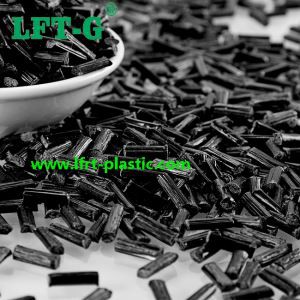


LCF PEEK: The "Limit" of Performance
In the "unexplored territory" of today's technology - whether it's the deep sea at a depth of ten thousand meters or the vacuum of near-Earth orbit - engineers are collectively facing a challenging predicament: the "ceiling" of traditional material performance. Although metals (such as titanium alloys and high-strength steels) are strong, their weight, corrosion resistance, and complex processing procedures have become heavy constraints for design iterations; while traditional engineering plastics are lightweight, they quickly "give in" under extreme high temperatures, high pressures, and the attack of corrosive chemicals.
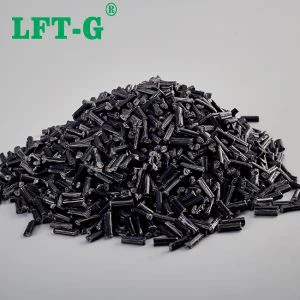
This is the significance of the LCF PEEK (long carbon fiber reinforced polyether ether ketone) composite making its appearance. Traditional short fiber reinforced plastics are essentially still "plastic matrices" with countless isolated "reinforcement points" floating within them. However, the core innovation of LCF PEEK compound resin lies in the fact that it constructs a "continuous three-dimensional carbon fiber framework (3D Structural Skeleton)" within the material. During the injection molding process, these long carbon fiber bundles (typically over 5 mm in length) interweave and overlap with each other, forming a complete fiber network within the component that can independently bear stress.
What is the Advantage of CF PEEK?
Structural and mechanical properties
Revolutionary impact resistance and high toughness Long carbon fibers (LCF) create a three-dimensional "bearing framework" within the material. When subjected to impact, this network structure can effectively disperse and absorb energy. Its notch impact strength and fracture toughness are far superior to those of short fibers or glass fiber materials.
Excellent fatigue resistance and durability The continuous fiber framework makes it less likely to develop microcracks or suffer from fatigue failure under long-term, high-frequency cyclic loads, ensuring an extremely long service life for the component under harsh conditions.
Thermodynamics and Dimensional Stability
Extremely high high-temperature rigidity and creep resistance LCF PEEK material not only inherits the high temperature resistance of the PEEK matrix, but more importantly, the "anchoring" effect of the LCF framework enables it to maintain extremely high rigidity (modulus) at high temperatures and effectively resist high-temperature creep under long-term loading.
Low thermal expansion coefficient Comparable to metals' low thermal expansion coefficient (CLTE) Its linear thermal expansion coefficient is extremely low and uniform, close to or even lower than that of aluminum alloys. This means that in environments with drastic temperature changes, components hardly undergo thermal expansion or contraction, ensuring high dimensional stability for precise fits (such as bearings, gears).


Functionality and environmental tolerance
Top-notch chemical corrosion resistance and hydrolysis resistance. It perfectly inherits the "chemical inertness" of the PEEK matrix and can resist the erosion of almost all chemical solvents.
Design and manufacturing advantages
It can achieve precise injection molding. Unlike thermosetting composites (which require compression curing) or metals (which require CNC cutting), LCF PEEK retains the thermoplastic property, allowing for efficient and cost-effective mass production through injection molding processes.
Extremely high design flexibility and component integration. It enables the integration of multiple independent metal parts into a single injection molded part, significantly reducing assembly costs and potential failure points.
What is LCF PEEK Used For?
Aerospace Industry
Structural Components: By replacing aluminum alloys with this material for secondary load-bearing parts of aircraft, such as supports, angle braces, seat frames and fairings, the weight of the aircraft can be significantly reduced, and fuel efficiency can be improved.
Engine Components: Utilizing its high-temperature creep resistance, manufacturing blades, casings, and fasteners in the engine compartment, maintaining rigidity and dimensional stability even at 250 °C high temperatures.
Unmanned Aerial Vehicles (UAVs): Manufacturing fuselage frames and landing gears, balancing high strength, impact resistance and lightweight.
Defense Applications: For lightweight structural components of missiles, radar domes and military equipment.
Automotive Industry
Powertrain: Replaces metal for gears, bearing cages, thrust washers, and pump impellers. It is resistant to high temperatures, wear, oil corrosion, and can reduce operating noise.
Body and Chassis: Used for manufacturing high-strength structural components, reinforcing ribs for battery packs, and suspension system parts. It helps reduce weight while enhancing crash safety. Racing (Motorsport): These events such as F1 and Le Mans extensively use it. It is used to manufacture components like gearboxes and suspension arms, with the aim of achieving every ounce of weight reduction.
Energy equipment components
Underground tools: Manufacturing components for drilling motors, cable connectors, seals, and support rings. LCF PEEK can operate for a long time in high-temperature, high-pressure, strong acid and corrosive gas environments at depths of several thousand meters.
Chemical pumps and valves: Manufacturing impellers for pumps, valve seats, sealing rings and shaft sleeves. Its excellent corrosion resistance and wear resistance far exceed those of traditional metals and plastics.
FAQ
Q: What are the fundamental differences between LCF PEEK and SCF PEEK?
A: The fundamental difference lies in the internal structure. In SCF PEEK, it is merely a "filler" dispersed within the plastic; while in LCF PEEK, the long carbon fibers within the component "interlock" with each other, forming a three-dimensional load-bearing framework.
Q: Is this material difficult to process? Does it require special equipment?
A: It does require an injection molding machine capable of reaching high temperatures and a wear-resistant screw, and has specific requirements for mold design to protect the fiber length. However, it still falls under the category of injection molding and does not require the long-term curing of thermosetting materials.
Q: The cost of LCF PEEK is so high. Why not use metal?
A: The "total system cost" should be considered, rather than the "unit material price". The light weighting it brings can significantly reduce energy consumption in fields such as aviation and automobiles, and its corrosion resistance also reduces maintenance costs throughout the entire lifecycle.
Hot Tags: lcf peek: the "limit" of performance, China, manufacturers, suppliers, factory, buy, customized