
LCF PEEK Composite: Lightweight Structural Solutions
At the pinnacle of specialty engineering plastics, polyether ether ketone (PEEK) has long-established its dominant position. However, when engineers attempt to use it to completely replace metal load-bearing structural components, pure resin or even ordinary short-fiber reinforced materials often fall short. This is precisely the moment when LCF PEEK (long carbon fiber reinforced polyether ether ketone) composite comes into play. It is not merely an improved formula, but a brand-new material system that redefines the mechanical transmission path at the microstructure level. For high-end manufacturing industries that pursue ultimate light weighting and structural integrity, LCF PEEK plastic pellet is redefining the boundaries of "plastic replacing steel".
From "Filling" to "Enhancement" - A Qualitative Transformation
The key to understanding the application scope of this material lies in grasping the definition of "length". In traditional short-cut carbon fiber (SCF) composite materials, the fiber length is usually less than 1 millimeter. They exist in the resin matrix like loose sand, mainly serving to fill and harden.
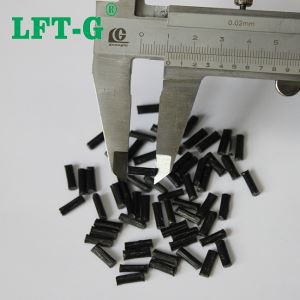
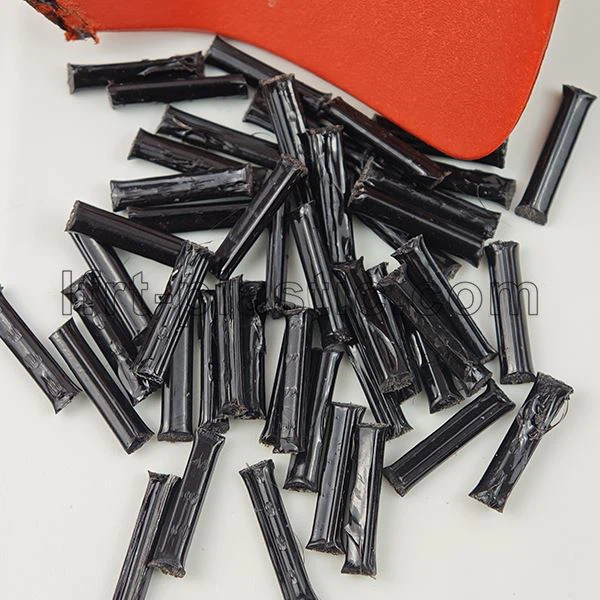
However, in the granular form of LCF PEEK, the length of the carbon fibers is consistent with the length of the granules (typically ranging from 5 mm to 25 mm). This physical extension of length leads to a qualitative change after injection molding: the fibers no longer exist as isolated entities, but are intertwined and connected within the component, forming a three-dimensional interlocking "skeletal network".
This microscopic structure determines the macroscopic properties. When the component is subjected to external force impact, the energy does not concentrate at a single point, causing brittle fracture, but is rapidly dispersed throughout the entire component through this continuous fiber network. This explains why the notch impact strength of LCF PEEK can reach several times that of proportionally shorter fiber materials - it endows the material with a "resilience" similar to that of metal, rather than merely the "hardness" of ceramics.
The Freedom Of Structural Design

From the perspective of a structural engineer, the greatest advantage of LCF PEEK lies in its extremely high specific strength and creep resistance.
Although metallic materials have high strength, they have a high density; and in complex configurations, metal processing is often limited by the bottleneck of subtractive manufacturing. The tensile strength of LCF PEEK can easily exceed 250 MPA, and its modulus is close to that of aluminum alloys, but its density is low. This means that under the same load conditions, the weight of the component can be reduced.
The deeper value lies in its fatigue resistance and dimensional stability. Many plastics will experience "cold flow" or creep under long-term stress or high temperatures, resulting in assembly failure. However, thanks to the support of the long-fiber framework, LCF PEEK exhibits astonishing creep resistance. Even when subjected to long-term loading at higher temperatures, it can maintain a constant size. This makes it fully qualified for use in manufacturing key stressed components such as brackets around automotive engines and connecting parts for aerospace fairings.
LCF PPS: Dimension Reduction Strike

Just having excellent performance is not enough to convince enterprises to switch to this material. The core competitiveness of LCF PEEK in the commercial field lies in its simplification of the manufacturing process.
Traditional metal structural components, from raw materials to finished products, often require multiple processes such as die casting, cutting, and debarring. This not only takes a long time but also leads to an exponential increase in processing costs for complex structures with internal flow channels, snap-in parts, or thin-walled strengthening ribs.
Although the unit price of LCF PEEK is relatively high, it possesses the injection molding advantages of thermoplastic materials. Through mold design, it can produce extremely complex geometries in a single process, and even integrate metal inserts, threads, and sealing grooves together. From the perspective of total system cost, using LCF PEEK instead of metal typically leads to significant cost savings and capacity improvement.
FAQ
Q: What are the key difficulties in injection molding?
A: Prevent fiber breakage. The "low shear" principle must be followed: use a special screw for long fibers, combined with large-sized gates, low back pressure and low rotational speed. Once the fiber is cut, it degenerates into ordinary short-fiber material.
Q: Is the wear resistance definitely better than that of SCF PEEK?
A: Under different conditions. At high load and low speed, the LCF (long fiber composite) has a significant advantage (resistant to creep, pressure resistance); however, in low load and high-speed friction, after the long fibers are peeled off, they may become "grinding particles" and cause damage to the mating parts.
Q: Can the performance of LCF PEEK truly replace that of aluminum alloy?
A: The strength-to-weight ratio is superior to that of aluminum. Although the absolute strength is slightly lower than that of 6061 aluminum, its density is lower than that of aluminum. Under the same weight, LCF PEEK has greater load-bearing capacity and possesses fatigue resistance and damping vibration reduction properties that metals do not have.
Hot Tags: cf peek: lightweight structural, China, manufacturers, suppliers, factory, buy, customized