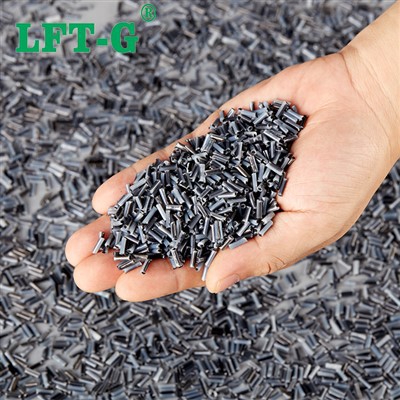

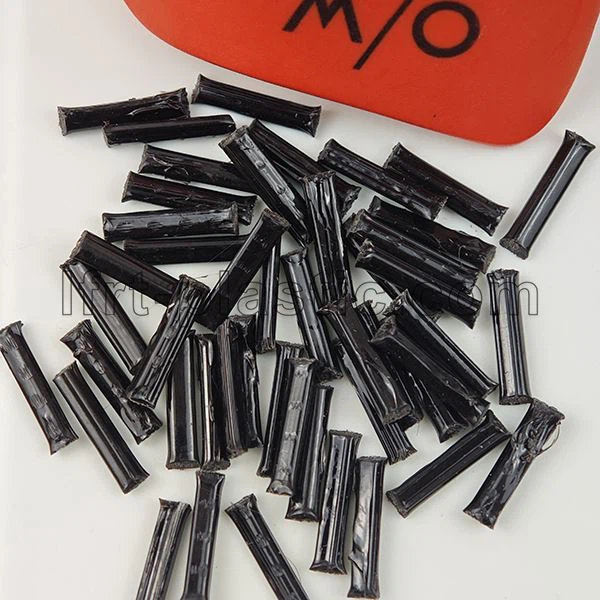
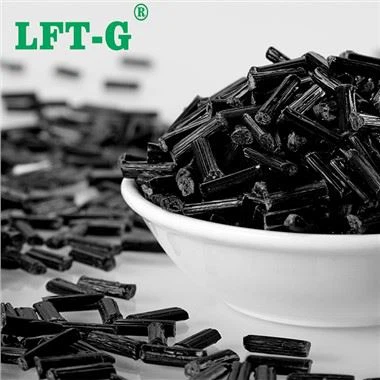
Lightweight LCF Nylon 66 Plastic Pellet
In the contemporary engineering field, we are at a crossroads. On one hand, there is an endless pursuit for higher performance, lighter weight, and longer durability; on the other hand, the performance limits of traditional materials (such as metals, short-fiber composites) are becoming increasingly evident.
Are you looking for a material that can withstand extreme working temperatures, remain "calm" (i.e., maintain dimensional stability) under harsh loads, and be as light as a feather? If your answer is "yes", then what you are looking for might not merely be a "material", but rather a "structural solution". Then the LCF PA66 material will be an extremely rare and excellent material.
Analysis of LCF PA66 Composite
To truly understand the power of LCF PA66, we must delve into its "genetic" level and observe how the two core elements that constitute it achieve a result greater than the sum of its parts (1+1 > 2).
PA66 is already a top performer among engineering plastics. It offers:
Outstanding thermal stability: It maintains structural integrity even in the high-temperature engine compartment or industrial environments.
Natural chemical inertness: It has exceptional resistance to oils, fuels, and a wide range of chemicals.
Strong toughness and wear resistance: It is a classic choice for manufacturing gears and wear-resistant components.
However, PA66 does have its limits. Under extremely high loads, it will yield; under drastic temperature changes, it will expand and contract. This is where "long carbon fibers" come into play.
"Length" is the key word here. Unlike the "each doing their own thing" of short fibers (SGF/SCF), long carbon fibers (LCF) interweave into a network within the material.
Three-dimensional stress transfer: When a certain point of the component is subjected to impact or pressure, this 3D framework will rapidly distribute the stress throughout the entire component, rather than allowing the weak point to bear the stress alone. This results in an exponential increase in its impact resistance.
"Reinforced" rigidity: Carbon fibers are the "masters of rigidity". Their addition gives LCF PA66 components a bending modulus and strength comparable to, and even surpassing, die-cast aluminum. Unparalleled dimensional stability: The extremely low thermal expansion coefficient (CTE) of carbon fiber "locks" the PA66 matrix, ensuring that the final component remains almost completely undisturbed during temperature cycling, thus meeting the most stringent tolerance requirements.
LCF PA66: Unlocking Four Core Capabilities
Capability 1: Lightweight "Ultimate Form" (Performance/Weight Ratio)
This is not just about "lightness". It's about achieving greater rigidity and toughness while reducing weight. For electric vehicles, this means longer range; for robotics, it means faster speed and lower energy consumption; for drones, it means longer hovering time and stronger structural reliability.
Capability 2: Durability against "Time" (Resistance to Fatigue and Creep)
Many materials are very strong when they are "manufactured", but they will "fatigue" or "creep" (i.e., undergo slow deformation) under continuous vibration or constant load. The continuous fiber framework inside LCF PA66 composite provides strong support, enabling it to exhibit outstanding fatigue resistance in high-stress, long-cycle applications (such as high-frequency vibrating supports, continuously stressed connectors).
Capability 3: "Invisible" Value (Shielding Ability)
This is an underestimated "hidden feature". The natural conductivity of carbon fiber enables LCF PA66 components to have excellent shielding capabilities. In today's highly electronic world, this means that your product's casing or structural components are already shielding devices, without the need for additional metal shielding layers, conductive coatings, or expensive secondary processing. This significantly simplifies the design and reduces the total cost.
Capability 4: The "liberation" of design (complexity and integration)
Do you still remember those complex metal components that required welding, tapping or riveting? LCF PA66 compound resin enables you to create extremely complex geometries through a single injection molding process. You can combine multiple different metal parts (such as brackets, housings, fasteners) into a lightweight and sturdy component. This represents a revolutionary optimization of manufacturing costs and production efficiency.
The application blueprint of LCF PA66 Composite
Automobile:
Electric vehicles: Battery pack housing, high-voltage connectors, lightweight dashboard frame, front module bracket. (It is both lightweight, flame-retardant, and equipped with EMI shielding.)
Intelligent cabin: Display screen bracket, seat adjustment mechanism. (High rigidity, low creep, ensuring no deformation over a long period of use.)
High-end Industry and Automation:
Robot Arm and Fixture: Extremely high rigidity and extremely light weight, achieving faster acceleration and higher grasping accuracy.
High-pressure Fluid System: Replacing metal manufacturing for valve bodies, pump casings and impellers, resistant to chemical corrosion and high pressure.
Aerospace and Unmanned Aerial Vehicles: UAV fuselage frame, landing gear, propellers. (Ultra-lightweight and impact-resistant).
Metal substitutes for aircraft seat components and interior decorative parts. (Compliant with strict FST standards).
Professional sports and leisure: High-end bicycle components, safety helmets, ski equipment holders. (Providing professional-level protection and performance in extreme sports).
FAQ
Q: Where does LCF (long carbon fiber) outperform SCF (short carbon fiber)?
A: Fiber framework effect. It forms an internal 3D network, increasing the impact resistance by 3 to 5 times, and significantly improving the high-temperature creep resistance performance.
Q: Is the LCF PA66 material conductive?
A: Conductive. It is a natural EMI electromagnetic shielding material and cannot be used as an insulating component.
Q: Why is LCF PA66 so expensive, yet it is still chosen?
A: Due to its outstanding extreme performance. It is lighter, harder, and has an extremely low thermal expansion coefficient (maintaining more stable dimensions), making it the preferred choice for precision and ultra-lightweight applications.
LCF PA66 compound resin is not merely a product on our shelves; it is a key we offer to you, enabling you to solve the "impossible" design problems that have long troubled you.
While your competitors might still be struggling over how to "reduce weight" for bulky products, you can already redefine the form, efficiency, and cost structure of products using LCF PA66 plastic pellet. Don't let the materials become a constraint for your innovation.
Hot Tags: lightweight cf nylon 66 pellet, China, manufacturers, suppliers, factory, buy, customized