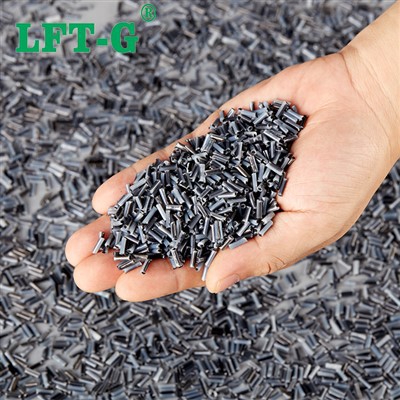


LFT-G® Long Carbon Fiber Reinforced PA66 for Robot Leg Parts
Agility, Endurance, and Strength: The Advanced Material for Robot Leg Systems
The development of sophisticated robot leg systems capable of complex and dynamic movements demands materials that can withstand significant stress while remaining lightweight. LFT-G® PA66 LCF30 emerges as a leading material solution for crafting high-performance robot leg components, delivering an exceptional combination of strength, lightweight design, and outstanding durability. By incorporating 30% continuous long carbon fibers into a robust polyamide 66 matrix, LFT-G® PA66 LCF30 achieves an impressive strength-to-weight ratio, enabling the creation of robot legs that are both powerful and energy-efficient. This specialized grade of LFT PA66 LCF30 is expertly formulated to endure the repetitive loads, impacts, and vibrations inherent in robotic locomotion, ensuring excellent fatigue resistance, creep resistance, and dimensional stability for precise articulation and long operational life. Its inherent properties contribute directly to enhanced robot agility, speed, and the ability to navigate challenging environments.

Key Advantages of LFT-G® PA66 LCF30 for Robot Leg Parts
- High Strength and Stiffness: Provides the necessary structural integrity to support robot weight and withstand dynamic forces during locomotion.
- Significant Lightweighting: Contributes to improved energy efficiency and allows for faster, more agile, and dynamic movements in robot legs.
- Excellent Fatigue and Creep Resistance: Ensures the long-term reliability and consistent performance of leg joints and structural components under repeated stress cycles.
- Good Impact Resistance: Helps robot legs absorb shocks and impacts encountered during walking, running, or interacting with the environment.
- Dimensional Stability: Maintains precise tolerances and geometric accuracy, crucial for smooth and controlled articulation of robot leg joints.
- Design Flexibility: Allows for the creation of complex and optimized leg component designs, integrating multiple functions into single parts.
By selecting LFT-G® PA66 LCF30 for your robot leg components, you are choosing a material engineered for the demands of modern bipedal and multi-legged robotics. Our specialized LFT PA66 grades, reinforced with long carbon fibers, empower robot manufacturers to develop leg systems that are not only strong and lightweight but also exceptionally durable and agile. Explore the possibilities and partner with us to engineer the next generation of high-performance robotic locomotion.
For more technical data, please refer to the specification below, or
Contact Our Experts for Robot Leg Material Solutions
LFT-G® PA66 LCF30 Technical Data Sheet for Robotics Components
This document provides technical data for a 30% Long Carbon Fiber reinforced Polyamide 66 (LFT-G® PA66 LCF30) material, specifically relevant for robot mechanical arms, grippers, and other structural robotics components. The data presented here is based on typical values obtained from international material suppliers and standards. Please refer to the specific datasheet of your program for precise LFT material values.
Mechanical Properties
| Property | Value | Unit | Test Standard |
|---|---|---|---|
| Tensile Strength | 230-260 | MPa | ISO 527-1 |
| Tensile Modulus | 23000-25000 | MPa | ISO 527-1 |
| Elongation at Break | 1.5-2.5 | % | ISO 527-1 |
| Flexural Strength | 320-350 | MPa | ISO 178 |
| Flexural Modulus | 14000-16000 | MPa | ISO 178 |
| Notched Izod Impact Strength (+23°C) | 38-48 | kJ/m² | ISO 180/1A |
| Notched Izod Impact Strength (-30°C) | 36-47 | kJ/m² | ISO 180/1A |
| Fatigue Strength (at 106 cycles) | 80-120 | MPa | Based on Internal Testing |
Thermal Properties
| Property | Value | Unit | Test Standard |
|---|---|---|---|
| Melting Temperature | 267-299 | °C | ISO 11357 |
|
Heat Deflection Temperature (HDT/A, 1.8 MPa) |
240-255 | °C | ISO 75-1 |
| Coefficient of Linear Thermal Expansion | 2-5 | x 10-6/K | ISO 11359 |
Other Properties
| Property | Value | Unit | Test Standard |
|---|---|---|---|
| Density | 1.23-1.25 | g/cm³ | ISO 1183 |
| Specific Gravity | 1.23-1.25 | - | ISO 1183 |
| Flammability (UL 94) | V-0 (typically) | - | UL 94 |
| Moisture Absorption (24 hours) | 1.3-1.7 | % | ISO 62 |
| Shrinkage Rate (Mold Shrinkage) | 0.2-0.8 | % | ASTM D-955 |
| Volume Resistivity | 101-103 | Ohm·cm | ASTM D257 |
| Creep Modulus (at specific temp/time) | Excellent | - | ISO 899 |
Chemical Resistance (Typical)
LFT-G® PA66 LCF30 exhibits excellent resistance to the following substances relevant to industrial and robotics environments:
- Oils (Lubricating Oils, Hydraulic Fluids) - Excellent
- Greases - Excellent
- Many Solvents - Good (Consult specific compatibility charts)
- Water and Humidity - Good (Properties can be affected by moisture absorption)
Processing Information (Typical)
Recommended processing conditions for LFT-G® PA66 LCF30 for injection molding of robotics components:
- Melt Temperature: 280-300 °C
- Mold Temperature: 80-130 °C
- Injection Speed: Medium to High (to ensure good fiber dispersion and orientation)
- Holding Pressure: Optimized for part precision and minimal warpage
- Drying: Essential before processing (typically 80-100 °C for 2-4 hours).
Notes and Supplementary Information:
Data Source: This data is compiled based on typical values found in publicly available datasheets from Xiamen LFT-G PA66 LCF30 material manufacturers and standards. Fatigue strength is based on internal testing. LFT-G® PA66 LCF30 offers an outstanding combination of ultra-high strength, stiffness, and lightweight properties, along with excellent fatigue and creep resistance and good dimensional stability, making it a premium material for demanding robotics components. Its inherent electrical conductivity can also be a key advantage. Please consult specific regulatory compliance documentation relevant to robotics and industrial applications. For precise and specific data for your program, please consult the datasheet provided by your material supplier.
Download Complete LFT PA66 LCF30 Data Sheet PDF
Hot Tags: lft-g® lcf30 pa66 for robot arms and parts, China, manufacturers, suppliers, factory, buy, customized