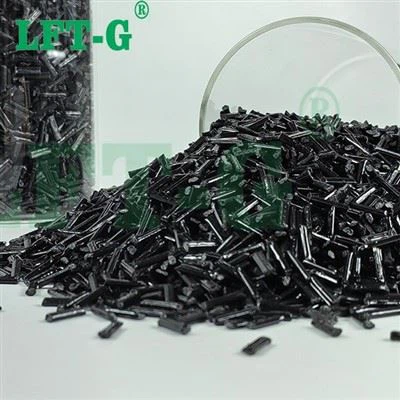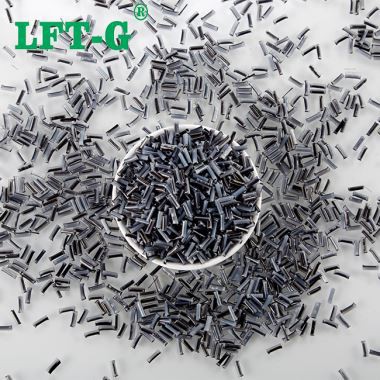


In today's manufacturing trend that pursues ultimate lightweight, high strength and functional integration, materials science is undergoing a profound transformation. Polyamide 6 (PA6), as a mature engineering plastic, is renowned for its excellent toughness and wear resistance. However, when it is combined with long carbon fibers, its performance will experience an exponential leap.
LCF PA6: A New Benchmark for Performance
The LCF PA6 composite material is not merely a simple "filling" of plastic. It is an advanced structural material. By uniformly impregnating and maintaining the critical fiber lengths within the PA6 matrix, we have created a material that successfully integrates the rigidity and strength of metals with the design flexibility and processing efficiency of thermoplastic plastics.
What is LCF PA6?
LCF PA6 compound resin is a high-performance long-fiber reinforced thermoplastic composite material (LFT). Its key feature lies in the length of the reinforcing material - carbon fibers.

Different from short carbon fibers (SCF): In traditional short carbon fiber (SCF) PA6, the fiber length is usually less than 1 millimeter. However, in LCF PA6, the initial fiber length (in the pellets) is typically 5 to 25 millimeters.
The crucial "long fiber" effect: During the injection molding process, although fibers will break to some extent, the final molded part still retains an average length far exceeding that of short fibers.
3D Skeletal Network: Longer fibers can entangle and overlap with each other within the component, especially during the cooling and curing processes, forming a three-dimensional fiber skeletal network. This network serves as the microscopic foundation for the outstanding performance of LCF PA6. It can effectively transfer and disperse stress throughout the entire component, rather than merely reinforcing locally as short fibers do.
Application Case
LCF PA6 compound resin possesses irreplaceable advantages in terms of rigidity, lightweight, and conductivity. The uniqueness of LCF PA6 composite makes it an ideal material for the following demanding fields:


LCF PA6: Core Advantages and Detailed Characteristics
The performance of LCF PA6 compound resin is far superior to that of short fiber materials or unreinforced PA6. Its advantages are manifested in multiple aspects:
High strength and high modulus: The introduction of LCF has led to a geometrically exponential increase in the strength and rigidity (bending modulus) of the PA6 matrix.
Outstanding impact resistance: When subjected to impact, the long-fiber skeleton network can absorb a large amount of energy through the withdrawal and fracture of fibers and the yield of the matrix. Therefore, LCF PA6 components exhibit extremely high notch impact strength and maintain excellent toughness even in low-temperature environments.
Exceptional fatigue resistance and creep resistance: Under long-term cyclic loads (fatigue) or continuous static loads (creep), the long-fiber network can effectively inhibit the plastic flow of the matrix.
Vs. LGF PA6:
LCF PA6 composite boasts unparalleled advantages in terms of rigidity, lightweight, and conductivity. If the application requires EMI shielding or extreme rigidity, LCF is the preferred choice.
Vs. Metal:
LCF PA6 plastic pellet offers significant weight reduction, simplifies the production process (one-step injection molding), reduces the overall system cost, and provides splendid chemical corrosion resistance.
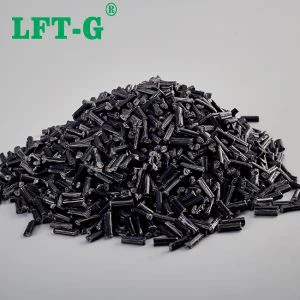
The LCF PA6 composite material is not merely an upgrade of a material, but also a revolutionary change in design concept. It offers engineers unprecedented freedom, enabling them to achieve light weighting, structural rigidity, impact resistance, dimensional accuracy, and functional integration (such as conductivity) within a single material. By precisely controlling the material formula and injection molding process, LCF PA6 can reliably replace traditional metal components, demonstrating unparalleled comprehensive advantages in reducing system costs, enhancing production efficiency, and improving the performance of the final product.
FAQ
Q: The surface of the part is rough and there are obvious "floating fibers". How can we improve this?
A: This is a common challenge with LCF materials, as the fibers float to the surface before cooling. The mold temperature needs to be significantly increased, the injection speed needs to be raised, and the material needs to be ensured to be fully dried.
Q: Why do LCF PA6 products have silver threads, bubbles, or streaks on their surface?
A: The material has not been dried! This is a typical manifestation of the hydrolysis of the PA6 matrix. To solve this problem, it is necessary to ensure that the materials are thoroughly dried, check the moisture content, and avoid prolonged exposure.
Q: For LCF PA6 injection molding, what kind of gate should be used?
A: General principle: "Coarse, short, smooth", minimize cutting as much as possible. (For example, fan-shaped gateways, lap-type gateways, etc.)
Hot Tags: lcf pa: performance benchmark, China, manufacturers, suppliers, factory, buy, customized