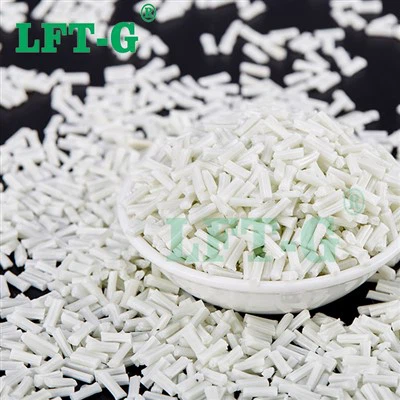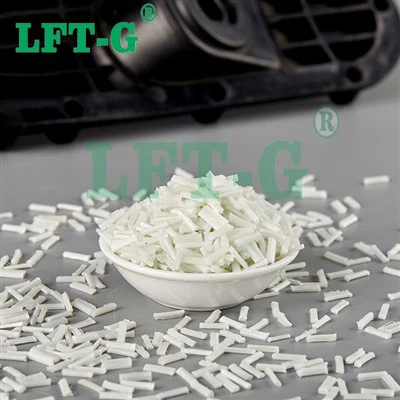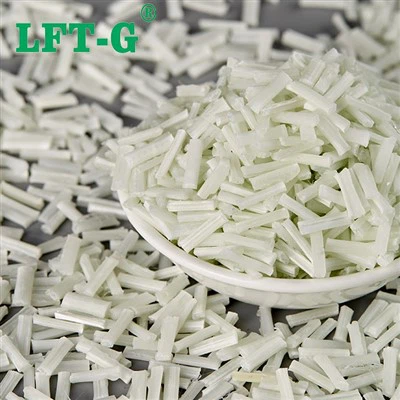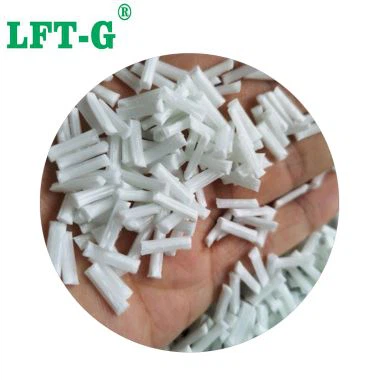

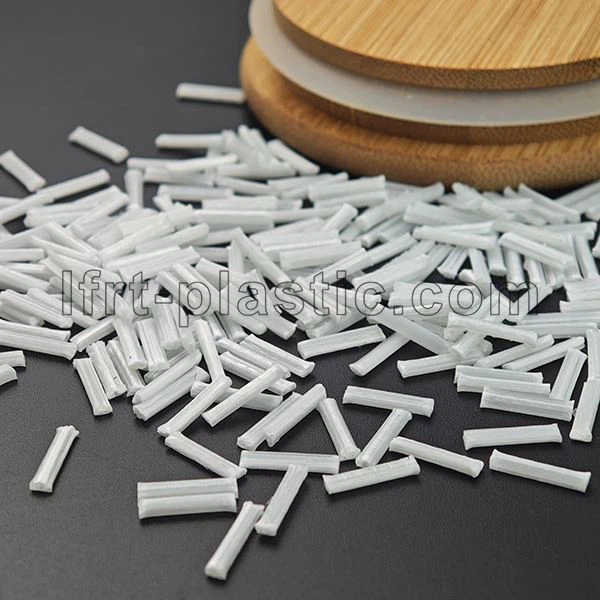


LFT-G® PP LGF50 | The Pinnacle of Stiffness for Metal Replacement
PP LGF50: The Pinnacle of Composite Stiffness Than PP GF50 Short fiber
For engineers pushing the boundaries of material science, the question arises: "What is the strongest and stiffest polypropylene available?" The definitive answer lies in maximizing the long fiber content. LFT-G® PP LGF50-NG05H represents the apex of our portfolio, a 50% long glass fiber reinforced composite based on a rigid homopolymer polypropylene (Homo PP) matrix, designed for ultimate load-bearing capacity,is different than PP GF50 short fiber composite.
This ultra-high reinforcement level creates a dense, interlocking 3D fiber skeleton within the part, achieving a flexural modulus that directly challenges die-cast aluminum and magnesium. It is the premier solution for applications where absolute rigidity and zero deflection are critical, such as automotive load floors, large industrial machine bases, and structural frames for renewable energy equipment.
When an application demands the highest possible stiffness-to-weight ratio and unwavering structural integrity, LFT-G® PP LGF50 is the ultimate choice.
The Spectrum of Performance: Locating PP LGF50
Engineering is about trade-offs. As long glass fiber content increases, the material properties shift along a predictable spectrum from maximum toughness to maximum stiffness. LFT-G® PP LGF50 sits firmly at the peak of stiffness and strength.
Technical Data Sheet: LFT-G® PP LGF50-NG05H
Typical values for our maximum stiffness homopolymer grade. Data is for reference only.
| Property | Test Method | Units | Typical Value |
|---|---|---|---|
| Long Glass Fiber Content | ASTM D5630 | % by weight | 50 |
| Density | ASTM D792 | g/cm³ | 1.32 |
| Tensile Strength | ASTM D638 | MPa | 155 |
| Flexural Modulus | ASTM D790 | GPa | 11.2 |
| Notched Izod Impact Strength (@23°C) | ASTM D256 | kJ/m² | 45 |
| Heat Deflection Temperature (@1.82 MPa) | ASTM D648 | °C | 160 |
Case Study: EV Reconfigurable Load Floor
Challenge
A premium electric SUV brand designed a large, thin, reconfigurable trunk load floor. The challenge was immense: it had to support up to 200 kg of cargo across a wide span with less than 5mm of deflection, be extremely lightweight to maximize vehicle range, and integrate complex locking mechanisms directly into the mold. Aluminum was too heavy and wood-based composites lacked the required durability and moisture resistance.
Solution
LFT-G® PP LGF50-NG05H was the only polymer that met the stiffness-to-weight demands. The 50% long glass fiber content delivered the necessary modulus to prevent sagging under heavy loads. Advanced mold flow simulation allowed for the creation of a ribbed underside that optimized strength without adding mass, a feat impossible with metal. The material's dimensional stability ensured the integrated locking points were perfectly precise.
Result
The final load floor was 60% lighter than the initial aluminum prototype and 25% lighter than a comparable LFT-G® PP LGF40 design, directly contributing to an increased vehicle range. It easily passed all load-bearing and durability tests. The single-piece molding process drastically reduced assembly complexity and overall cost, enhancing the vehicle's premium feel and functionality.

Applications Demanding Ultimate Rigidity

EV Battery Pack Frames
Offers extreme stiffness for cell protection in a lightweight, non-conductive, and corrosion-resistant frame, replacing heavier and more complex metal assemblies.

Robotic Arm Structures
In high-speed automation, robotic arm stiffness is key to precision. PP LGF50 provides the rigidity to minimize deflection and vibration, enabling faster and more accurate movements.

Solar Panel Mount Frames
Replaces aluminum for large solar farm installations. It offers the required long-term creep resistance to prevent sagging under constant load, while being corrosion-proof and lighter for easier installation.
Key Questions Answered
1. Is more glass fiber always better? What are the trade-offs of LGF50?
A: Not necessarily. While 50% fiber provides maximum stiffness and strength, the trade-off is reduced impact strength compared to LGF30 or LGF40, and a higher material density. The melt flow is also more challenging, making it best suited for less intricate, thick-walled structural parts. The choice depends on whether the primary design driver is stiffness or toughness.
2. What are the key processing considerations for PP LGF50?
A: Processing LFT-G® PP LGF50 requires careful attention to minimize fiber breakage. This includes using low-compression screws, large gates and runners in the mold design, and avoiding sharp corners. A proper molding process is crucial to ensure the long fibers maintain their length and form the intended structural network within the final part.
3. How does PP LGF50 compare to a carbon fiber composite like PA6 LCF30?
A: PP LGF50 is a cost-effective solution for high stiffness. PA6 LCF30 (30% Long Carbon Fiber) will typically offer even higher stiffness and strength at a much lower density, making it a premium lightweighting material. However, PP LGF50 provides better chemical resistance, zero moisture absorption, and a significant cost advantage, making it the superior choice for many industrial and automotive applications where extreme performance must be balanced with economic viability.
Ready to Engineer the Next Breakthrough?
Elevate your product's performance with the proven strength and versatility of LFT-G® PP LGF50. Contact our material specialists today to discuss your project or request a material sample.
Hot Tags: pp lgf50:pinnacle of stiffness vs pp gf50, China, manufacturers, suppliers, factory, buy, customized