

What is PP LGF40?
PP LGF40 (40% Long Glass Fiber Reinforced Polypropylene) is a high-performance thermoplastic composite material containing 40% continuous glass fibers in a polypropylene matrix. Unlike standard short glass fiber (SGF) materials, the long glass fibers in LFT-G® PP LGF40 maintain a continuous skeletal length within the injection-molded parts, yielding exceptional structural strength, fatigue resistance, and dimensional stability.
By compounding specialized polypropylene resins with aligned continuous glass fibers through a pultrusion process, LFT-G® ensures that the glass fibers maintain an optimal aspect ratio. This makes PP LGF40 the premier cost-effective choice for metal replacement projects, offering a 30% to 50% weight reduction compared to aluminum or steel casting without sacrificing structural integrity.

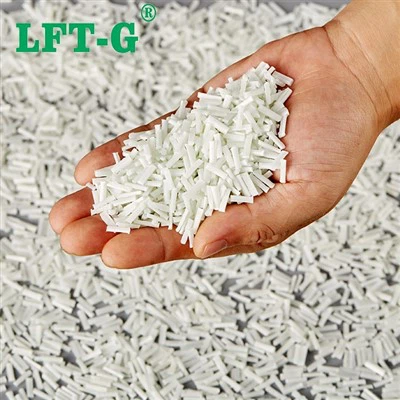
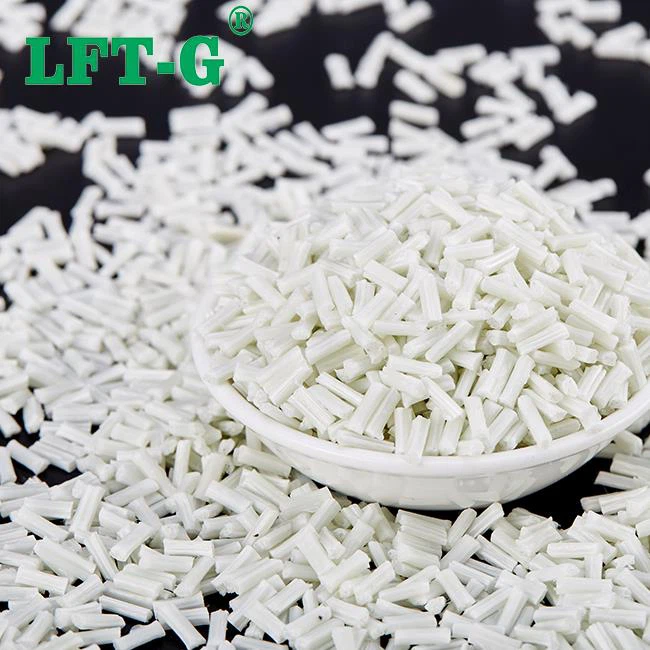
Figure 1: LFT-G® PP LGF40 cylindrical compounding pellets with visible continuous fibers.
The LFT-G® Advantage: The 3D Internal Skeletal Network
The superior performance of PP LGF40 lies in its internal structure. During the injection molding process, the long fibers (originally 10-12 mm in length) flow together and interlock, forming a 3D continuous skeletal fiber network. Standard short fiber PP, however, has broken fibers (usually less than 1 mm) which act merely as fillers. This network restricts plastic flow, distributes stress evenly, and prevents crack propagation under severe impact loads, especially at sub-zero temperatures.
Charpy Notched Impact Strength vs. Temperature
Comparison of LFT-G® PP LGF40 vs. PP SGF40 vs. Unreinforced PP (kJ/m²)
|
Material/ Notched Impact Strength |
Pure PP |
PP SGF40 | PP LGF40 |
| KJ/m² @80°C | 9 | 15 | 36 |
| KJ/m² @23°C | 8 | 18 | 45 |
| KJ/m² @0°C | 6 | 11 | 42 |
| KJ/m² @-40°C | 3 | 5 | 38 |
Figure 2: Performance curve showing LFT-G® PP LGF40 maintaining high impact resistance across sub-zero and elevated temperatures.
Typical Properties Datasheet of LFT-G® PP LGF40
The technical values below represent typical testing data of LFT-G® PP LGF40 under standard ISO/ASTM laboratory configurations. Ideal for engineering calculations and structural design reference.
| Mechanical Properties | Testing Method | Metric Value | Imperial Value |
|---|---|---|---|
| Density | ISO 1183 / ASTM D792 | 1.21 g/cm³ | 1.21 g/cm³ |
| Tensile Strength | ISO 527 / ASTM D638 | 130 - 145 MPa | 18,850 - 21,000 psi |
| Flexural Strength | ISO 178 / ASTM D790 | 190 - 210 MPa | 29,000 - 31,900 psi |
| Flexural Modulus | ISO 178 / ASTM D790 | 7,500 - 9,000 MPa | 1,132,000 - 1,234,000 psi |
| Charpy Notched Impact (23°C) | ISO 179 / ASTM D256 | 38 - 45 kJ/m² | 16.5 - 21.9 ft-lb/in² |
| Heat Deflection Temp (HDT @1.82 MPa) | ISO 75 / ASTM D648 | 156 - 158 °C | 305 - 316 °F |
| Mold Shrinkage Rate | ISO 294-4 | 0.1 - 0.2 % | 0.1 - 0.2 % |
Why Upgrade from PP SGF40 or Die-Cast Aluminum to PP LGF40?
For structural engineering applications, designers frequently face trade-offs between metal die castings, short fiber plastics, and long fiber thermoplastics. PP LGF40 stands out by bridging the gap, delivering high metal-like rigidity at a fraction of the weight, and outperforming standard short-fiber polypropylenes in severe fatigue tests.
vs. Short Glass Fiber PP
- √ Double the Impact Resistance: The continuous fiber network handles sudden load stress
- √ Extreme Low Warpage: Flatness and dimensional stability are superior during crystallization.
- √ Creep Mitigation: Resists continuous loads under high temperatures (up to 120°C).
vs. Die-Cast Aluminum & Steel
- ◎ 30% - 50% Weight Reduction: Drastically decreases components weight, enhancing automotive fuel efficiency.
- ◎ Zero Corrosion: Completely inert to rust, moisture, industrial chemicals, and saline environments.
- ◎ Design Integration: Integrates complex metal assemblies into a single consolidated injection-molded piece.

Figure 3: Car front-end module structural bracket injection molded using LFT-G® PP LGF40.
High-Value Industrial Applications of PP LGF40
Because of its optimal balance of performance, processing cost, and density, PP LGF40 has become the standard structural plastic for diverse industrial sectors:
1. Automotive Lightweight Parts
Used extensively in high-load structural automotive parts such as Front-End Modules (FEM), instrument panel brackets, tailgates, battery trays, door module carriers, and gear shift bases.
2. Home Appliances & Water Treatment
Excellent water chemical stability makes it the ideal material for high-strength washing machine outer tubs, pump housings, impeller components, and water purification brackets.
3. Mechanical Engineering & Industrial Equipment
Provides strong vibration damping and structural load capacity for heavy-duty power tool casings, machinery brackets, gas meter shells, and structural building connectors.
LFT-G®: A Trustworthy Global Partner
As a dedicated manufacturer specializing in long fiber thermoplastics (LFT), LFT-G® works closely with engineers globally-from leading automotive tier-1 suppliers in Europe to industrial plastic custom compounders in the Middle East.
- Full Quality Certifications: Fully certified under ISO 9001 and tested against RoHS, REACH, and SGS parameters to guarantee safety and ecological compliance.
- Custom Color & Compounding: Specialized formulation engineering including UV-stabilizers, heat-aging resistance, custom fiber loading (20% to 70%), and flame retardants (UL94 V-0).
- Worldwide Logistics & Service: Fast delivery to major industrial ports across the Middle East, Europe, and North America.

Figure 4: Advanced compounding Test equipment and R&D quality test center at LFT-G® factory.
Frequently Asked Questions (FAQ) about PP LGF40
Q1: What is the main difference between PP LGF40 and PP GF40?
The difference is the fiber skeleton. PP LGF40 contains 10-12 mm continuous fibers that form an internal 3D skeleton inside the molded part. PP SGF40 uses short fibers (under 1-2 mm) that act purely as structural dust fillers. This skeleton allows PP LGF40 to deliver double the impact strength, much higher fatigue life, and superior dimensional control with minimal warp.
Q2: Can PP LGF40 replace metals like aluminum or zinc alloy?
Yes, absolutely. PP LGF40 is optimized for metal replacement. It offers comparable mechanical properties (especially bending stiffness and load bearing) while reducing total component weight by up to 50%. It also eliminates corrosion problems, reduces production steps by integrating multiple brackets into a single mold, and is electrically insulating.
Q3: What are the shrinkage characteristics of PP LGF40 during injection molding?
PP LGF40 exhibits a typical mold shrinkage of 0.1% to 0.2% in flow direction, which is highly isotropic (meaning the shrinkage is uniform in both flow and cross-flow directions). This isotopic shrinkage significantly reduces warpage and deformation compared to SGF plastics, which typically have non-uniform shrinkage rates.
Q4: Does LFT-G® provide flame-retardant or UV-resistant versions of PP LGF40?
Yes. We formulate customized PP LGF40 composites. We can compound UV-stabilizer additives for outdoor sports and automotive exterior applications, and halogen-free or brominated flame retardants to achieve a UL94 V-0 flame-retardant rating for electrical components.
<
Get a Free Technical Consultation & Quick Quote
Are you looking to replace metal, improve structural strength, or test PP LGF40 for a new project? Fill out the inquiry form, and our engineering team will reply within 12 hours with customized options, technical advice, and details on obtaining free test samples
Stop settling for high CNC costs and heavy assemblies. Contact the LFT-G® engineering team for material selection and NVH dampening insights.
WhatsApp Quick Chat With US: +86 13950095707
Hot Tags: pp lgf40:40% long glass fiber polypropylene for heavy-duty engineering, China, manufacturers, suppliers, factory, buy, customized