LFT-G® PA66 LGF30 | The High-Heat & Fatigue Upgrade for PA66 GF30
LFT-G® 30% Long glass fiber PA66 (High Strength)
PA66 GF30 is the industry standard for high-temperature structural parts, preferred over PA6 for its higher melting point. However, in environments with cyclic thermal stress (heating and cooling) and vibration, standard short fibers often debond, leading to fatigue cracks and leaks. LFT-G® PA66-LGF30-NG03 is the engineered solution.
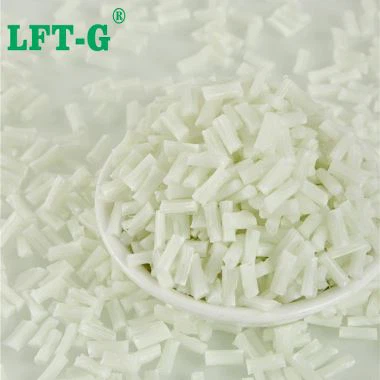
This Natural Grade (NG03) composite reinforces a high-crystalline Polyamide 66 (Nylon 66) matrix with a 30% Long Glass Fiber skeleton. This combination retains the high heat resistance of PA66 (up to 250°C short term) while drastically improving fatigue endurance and creep resistance, ensuring parts hold their shape and seal under extreme thermal cycling.
√ Superior Thermal Fatigue: The entangled fiber network resists crack propagation caused by expansion/contraction cycles, extending part life in engine bays.
√ Higher Load at Temperature: PA66 LGF30 maintains stiffness at temperatures where PA6 would soften, supporting heavier loads at 120°C+.
√ Warp Resistance: Significantly lower anisotropic shrinkage compared to short-fiber PA66, resulting in flatter, more dimensionally accurate parts.
*Based on accelerated thermal cycling tests (-40°C to +140°C).
Typical Material Properties
The following values are typical data for LFT-G® PA66-LGF30-NG03 (Natural Grade) and are for reference only. Data is for Dry-As-Molded (DAM) state. Please contact us for the official Technical Data Sheet (TDS).
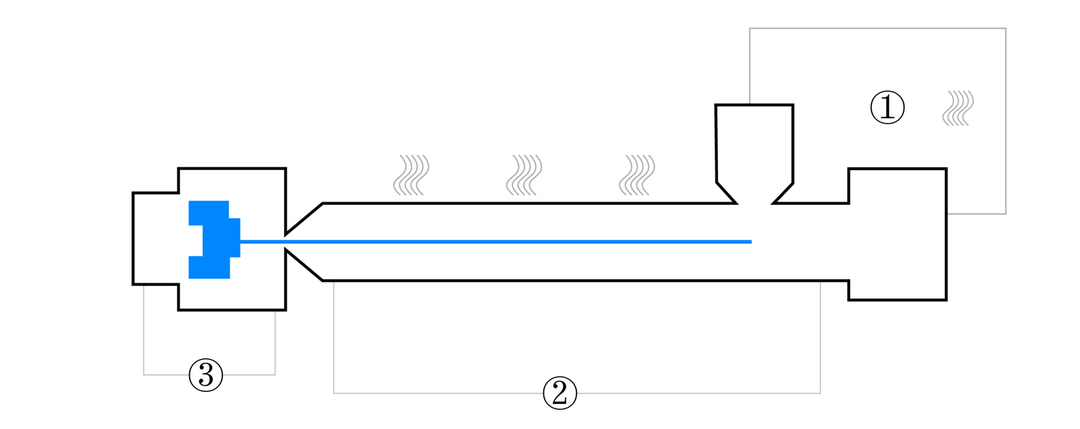
The following values are recommendations. We recommend desiccant / dry air dryers (moisture content below 0.1%).
To minimize fiber breakage and ensure optimal performance, a low-compression, general-purpose screw is highly recommended.
Parameter
Recommendation
Drying Temperature
80 - 100 °C
Drying Time
4 - 6 hours
Melt Temperature (Nozzle ③)
270 - 300 °C
Mold Temperature (Zone ②)
70 - 110 °C
Back Pressure
Low (to minimize fiber damage)
Case Study: Automotive Radiator End Tank
A critical engine cooling component. Exposed to pressurized hot coolant (115°C+) and engine vibration.
Root Cause Analysis (RCA)
PROBLEM: Original PA66 GF30 tanks developed leaks at the hose connection barb after 50,000 km.
CAUSE: Thermal Creep. The constant clamp pressure combined with heat caused the short-fiber nylon to deform ("relax"), breaking the seal.
SOLUTION & RESULT: Switched to LFT-G® PA66-LGF30. The long fiber skeleton resisted creep deformation. Leakage was eliminated, passing a 3,000-hour pressure pulsation test.
High-Heat/Pressure Zone Applications
🚗
Turbo Intercooler Caps
Replaces metal. PA66 LGF30 withstands the high boost pressure and rapid temperature spikes of turbocharged air without ballooning.
🚈
Railway Insulating Liners
Electrical isolation on tracks. Must survive extreme compressive loads from trains and UV exposure. LFT PA66 offers better long-term durability than PA6.
⚡
Circuit Breaker Bobbins
Internal coil supports. The high melting point of PA66 (260°C) ensures the bobbin doesn't melt during short-circuit heat spikes, maintaining safety.
People Also Ask (Google PAA)
1. What is the difference between PA6 GF30 and PA66 GF30?
A: The main difference is heat resistance. PA66 GF30 has a higher melting point (approx. 260°C) compared to PA6 (220°C). This makes PA66 better for high-temperature environments like engine components. However, PA6 often has better surface finish and impact toughness. LFT-G® PA66-LGF30 combines the best of both: high heat resistance with improved toughness.
2. What is the maximum temperature for PA66 GF30?
A: The Heat Deflection Temperature (HDT) of LFT-G® PA66 LGF30 is approximately 250°C (at 1.8 MPa load). For continuous service, it can typically withstand 130°C-150°C depending on the load and heat stabilization additives used, making it superior to PP or standard PA6.
3. Is PA66 GF30 strong?
A: Yes, very strong. Standard PA66 GF30 is rigid, but LFT-G® PA66-LGF30 (Long Fiber) is significantly stronger in terms of fatigue and impact. The long fibers create a structural network that resists crack propagation under cyclic loads, making it a viable replacement for die-cast aluminum in many applications.
Ready to Handle the Heat?
Upgrade to the superior thermal stability and fatigue resistance of LFT-G® PA66 LGF30. Contact our material specialists today to discuss your project or request a material sample.



 PA66 GF30 is the industry standard for high-temperature structural parts, preferred over PA6 for its higher melting point. However, in environments with cyclic thermal stress (heating and cooling) and vibration, standard short fibers often debond, leading to fatigue cracks and leaks. LFT-G® PA66-LGF30-NG03 is the engineered solution.