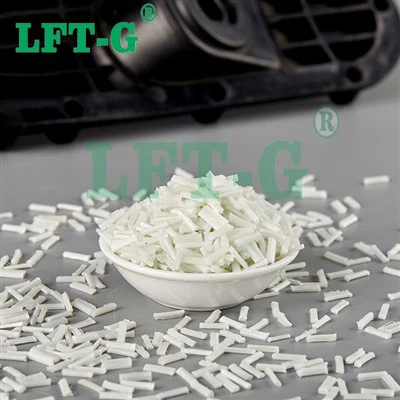


What is glass fiber nylon?
Glass fiber nylon 40 refers to a Polyamide 66 (nylon 66) resin reinforced with a 40% loading of glass fibers. Specifically, LFT-G® PA66 GF40 is a 40% long glass fiber reinforcement composite within a Polyamide 66 (PA66) matrix. This advanced thermoplastic composite is engineered for applications demanding superior structural performance. In contrast to materials reinforced with short glass fibers, the long glass fibers (typically 10-25mm) within the LFT-G® PA66 GF40 pellets create a robust internal skeletal network upon molding. This three-dimensional fiber structure is exceptionally effective at transferring stress, leading to a significant enhancement in the material's mechanical properties and making it an excellent lightweight alternative to metal components.
Glass Filled Nylon material properties?
LFT-G® PA66 GF40 Datasheet
Mechanical PropertiesProperty |
Value |
Unit |
Test Standard |
|---|---|---|---|
| Tensile Strength | 210-240 | MPa | ISO 527 |
| Tensile Modulus | 13500-14800 | MPa | ISO 527 |
| Elongation at Break | 1.5 - 2.5 | % | ISO 527 |
| Flexural Strength | 321-335 | MPa | ISO 178 |
| Flexural Modulus | 10500-11530 | MPa | ISO 178 |
| Notched Izod Impact Strength (23°C) | 35-45 | kJ/m² |
ISO 180
|
| Notched Charpy Impact Strength (23°C) | 33-45 | kJ/m² |
ISO 179
|
Other PropertiesProperty |
Value |
Unit |
Test Standard |
|---|---|---|---|
|
Specific Gravity
|
1.46-1.47 |
g/cm³
|
ISO 1183
|
|
Molding Shrinkage (Flow)
|
0.2 - 0.5 | % |
ISO 294-4
|
|
Heat Deflection Temperature (1.8MPa)
|
255 |
°C
|
ISO 75-2/A
|
|
Melt Temperature
|
280 - 300 |
°C
|
|
|
Mold temperature
|
80 - 90 |
°C
|
Disclaimer: This data represents typical values for LFT-G® PA66 GF40 composites. These figures are based on international testing standards and are intended for reference purposes only. Actual performance can vary based on specific molding conditions, part design, colorants, and other additives.
Download Complete PA66 GF40 Data Sheet PDF
Processing Information
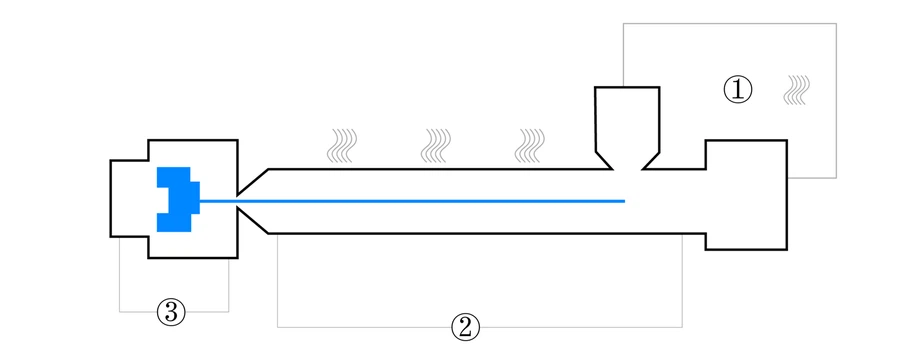
| ①Drying Time | 3-5 hours |
|
Drying Temperature |
85-105°C |
| ② Temperature Zone (Melt) | 280-300°C |
| ③Mold Temperature | 80-95°C |
Benefits of long glass fiber nylon66
- Outstanding stiffness and strength-to-weight ratio
- Exceptional impact toughness, even in cold environments
- Superior creep resistance for long-term load bearing
- High dimensional stability with minimal warpage
- Maintains performance at high operational temperatures
- Excellent fatigue endurance and durability

What is glass-filled nylon used for?

Automotive Components
Industrial & Sporting Goods
In industrial equipment, this long glass fiber nylon66 composite provides durability and resistance to wear and chemicals. It is used for parts like: industrial pump housings, impellers, valve bodies, high-load gears and bearings, conveyor system components, and structural brackets for heavy machinery. In sporting goods, its combination of light weight and high impact strength is perfect for high-performance equipment such as: bicycle frames and components, ski and snowboard bindings, firearm stocks and components, and frames for drones or other unmanned aerial vehicles (UAVs).

FAQ
Q: Can you injection mold glass-filled nylon?
A: Yes, absolutely. LFT-G® PA66 GF40 is designed for injection molding. However, to preserve the length of the glass fibers, which is key to its high performance, specific processing parameters are recommended. This includes using a low-shear screw design and minimizing sharp corners or restrictive gates in the mold design to ensure the fiber network is maintained in the final part.
Q: Does glass-filled nylon absorb water?
A: Yes, like all polyamides (Nylons), PA66 is hygroscopic and will absorb moisture from the atmosphere. While the glass fibers themselves do not absorb water, the PA66 matrix does. This can affect the material's properties and dimensional stability. Therefore, proper pre-drying of the pellets before molding is critical, and the potential for moisture absorption should be considered in the design of parts intended for humid environments.
Q: Is glass-filled nylon abrasive?
A: Yes, the high loading of glass fibers makes LFT-G® PA66 GF40 significantly more abrasive than unfilled nylon. It can cause wear on standard tooling over time. To ensure a long service life for your equipment, it is highly recommended to use molds, screws, and barrels made from hardened, wear-resistant tool steels.
Hot Tags: pa66 gf40 composites, China, manufacturers, suppliers, factory, buy, customized